The best basketball court cleaner depends on the type of playing surface. Hardwood courts need an approved floor cleaner, a dust mop, and very little moisture. Synthetic courts may allow damp mopping or automatic scrubbers, while outdoor courts often need sweeping and controlled washing.
Using the wrong cleaning solution or equipment can damage the floor, leave slippery residue, or affect its playing surface.
This guide explains which basketball court cleaning products to use, how to clean different surfaces, and what the equipment costs.
What Is the Best Basketball Court Cleaner?
There is no single cleaner suitable for every basketball court.
A finished hardwood gym floor needs different care from a vinyl, rubber, or outdoor acrylic surface. Before buying cleaning supplies, identify the floor material and check its manufacturer’s maintenance instructions.
| Basketball court surface | Suitable cleaning method | Main precaution |
|---|---|---|
| Hardwood | Dust mop and approved low-moisture cleaner | Avoid wet mopping and power scrubbers |
| Vinyl sports flooring | Dust mop and approved detergent | Follow the specific pad and rinsing instructions |
| Rubber sports flooring | Untreated dust mop and compatible cleaner | Avoid abrasive brushes and unapproved solvents |
| Poured polyurethane | Approved cleaner and permitted scrubber | Check the installed floor system |
| Outdoor acrylic | Broom, soft brush, and controlled rinsing | Avoid aggressive pressure washing |
| Modular sports tiles | Broom, dust mop, or approved washing method | Check drainage and debris beneath the tiles |
The Maple Flooring Manufacturers Association (MFMA) recommends daily dust mopping for maple sports floors and warns against water-using power scrubbers.
Synthetic flooring manufacturers may permit machines, but their instructions differ.
Types of Basketball Court Cleaning Products
Basketball court maintenance involves several tools. Some remove dust, while others remove marks, spills, or built-up dirt.
Basketball Court Floor Cleaners
Liquid floor cleaners remove dirt that dry mopping cannot collect.
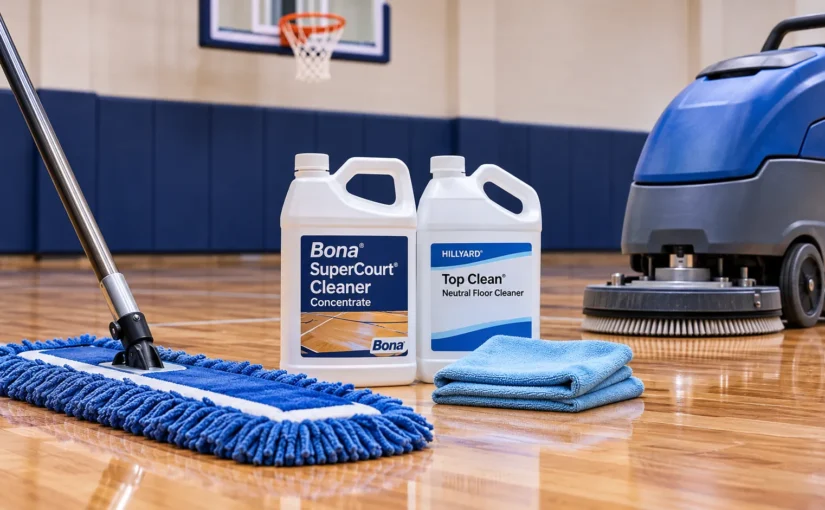
Bona SuperCourt Cleaner Concentrate is designed for unwaxed polyurethane wood floors. Bona specifies a dilution of one part concentrate to 128 parts water.
Hillyard Top Clean is a neutral floor cleaner listed among the maintenance options in Tarkett’s Omnisports guidance.
Neither product should be treated as suitable for every basketball court. Always confirm that the cleaner is approved for the installed floor and finish.
Dust Mops, Damp Mop, and Microfiber Systems
A dust mop is one of the most important tools for indoor basketball court cleaning.
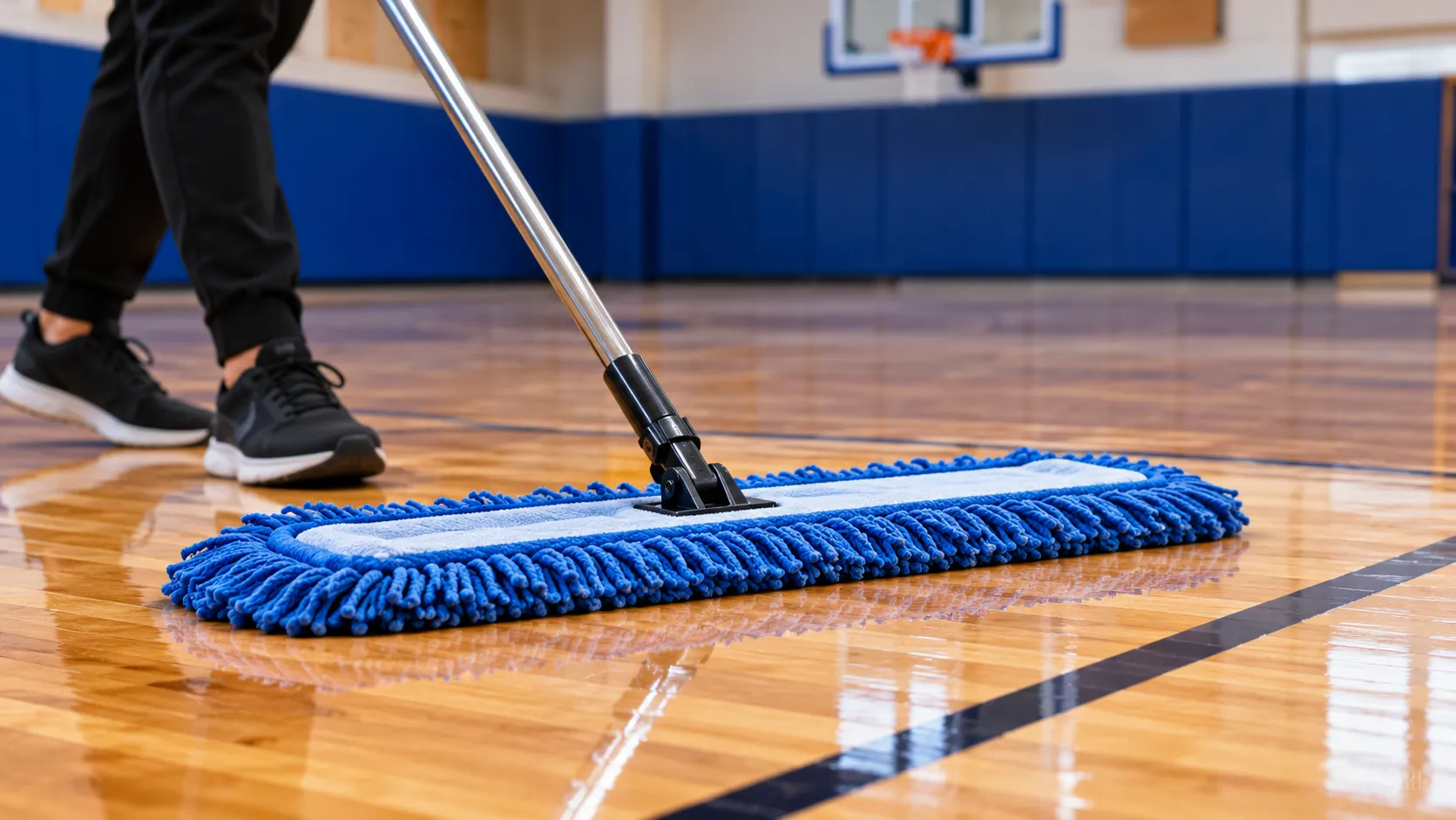
Wide microfiber dust mops collect loose dirt, dust, and grit before these particles scratch the playing surface.
For large gyms, a 60-inch dust mop can cover more floor with each pass than a small household mop.
Some systems also include separate pads for damp cleaning.
Use the dust mop treatment recommended for the floor. Oil-treated mops, for example, are prohibited in Tarkett’s Omnisports maintenance guidance.
Basketball Court Cleaning Machines
An auto scrubber uses a rotating pad or brush to clean the floor and recover dirty cleaning solution.
These machines can make cleaning large synthetic courts easier, provided the flooring manufacturer approves their use.
However, they are not suitable for every gym.
MFMA advises against automated power scrubbers for routine maple floor maintenance because of moisture, equipment weight, and potential floor damage.
Before using a machine, check its loaded weight, pad type, operating speed, water recovery, and floor compatibility.
Outdoor Court Cleaning Equipment
Outdoor basketball courts often need simpler equipment:
- Soft-bristled brooms
- Leaf blowers
- Garden hoses
- Approved cleaning solutions
- Pressure washers, where permitted
Avoid assuming that a pressure washer is safe because the court is made from asphalt or concrete. Its acrylic coating may have separate cleaning restrictions.
How to Properly Clean a Basketball Court
The correct process starts with identifying the playing surface. If you are planning a new court, our basketball court installation guide explains the broader installation process.
How to Clean a Hardwood Basketball Court or Gym Floor
Indoor hardwood courts require delicate handling to preserve the finish.
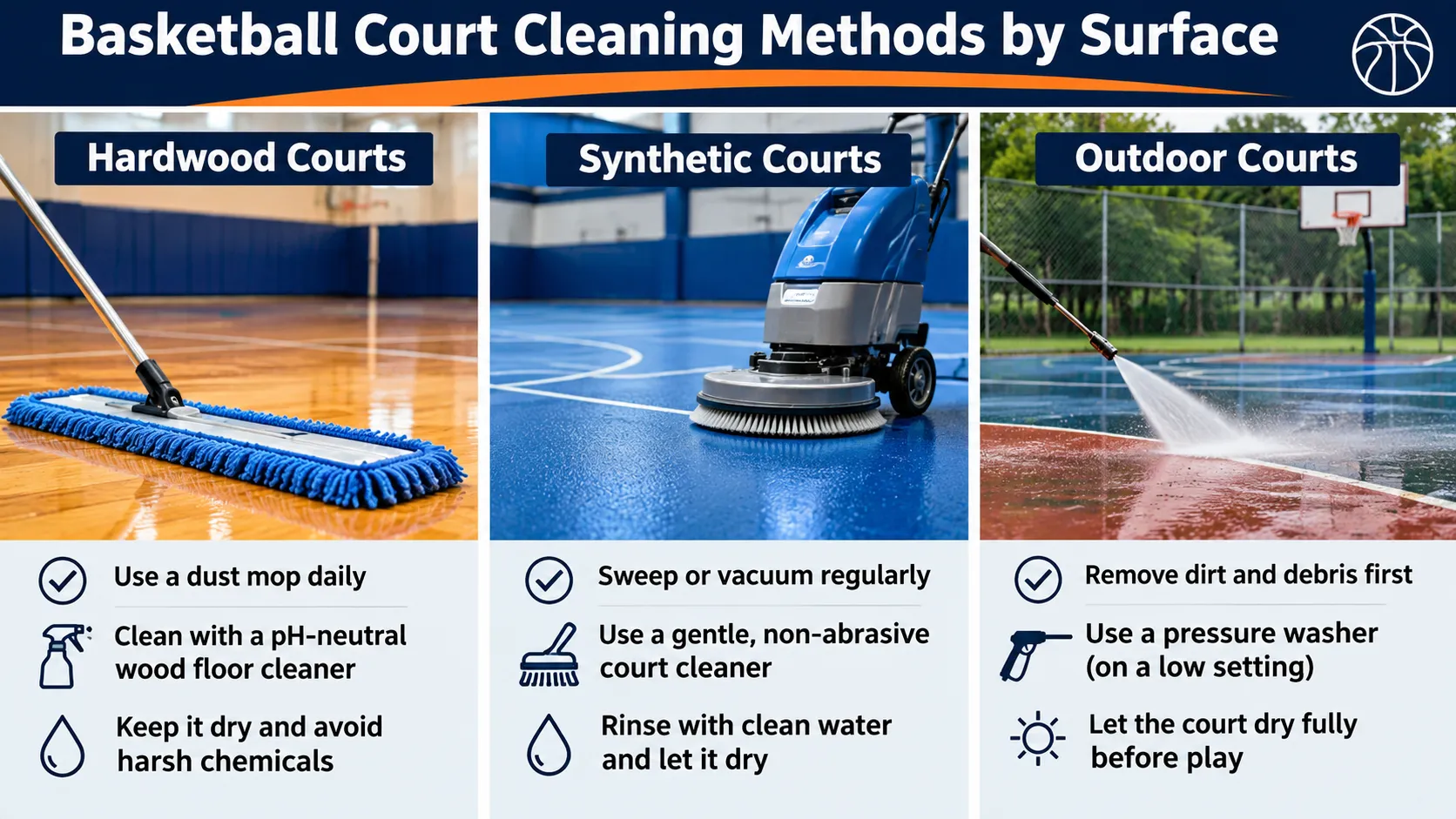
- Remove loose dirt using a properly treated dust mop.
- Wipe up sweat, spills, and other moisture immediately so they do not soak in; this helps maintain a clean court, supports safety, and reduces the risk of slips for athletes.
- Remove shoe marks with a finish-approved cleaner and soft cloth.
- For more thorough cleaning, use the manufacturer’s approved low-moisture method.
- Inspect the floor for remaining moisture or residue before allowing play.
MFMA describes a controlled method using a fine mist of approved cleaner and a microfiber T-frame mop. The solution is wiped up immediately rather than left soaking on the floor. Proper cleaning helps protect the finish and preserve durability. If dirt and moisture are left in place, they can break down the surface over time and lead to cracks and discoloration that shorten the floor’s life and extend repair needs.
Do not use a wet mop, bucket flooding, or routine power scrubbing on maple sports floors.
These methods can introduce excess moisture and damage the wood or finish, undermining a safe playing environment.
How to Clean a Synthetic Basketball Court
Synthetic basketball courts include vinyl, rubber, and poured polyurethane flooring.
Their cleaning requirements vary, and proper cleaning helps protect the surface, support durability, and preserve safety and performance.
For example, Gerflor’s sports sheetgoods guidance allows approved machine cleaning with controlled solution application, recovery, and rinsing.
Tarkett Omnisports specifies neutral detergent and a white nylon pad for routine machine washing.
Robbins Pulastic flooring has its own cleaning solution and machine instructions.
A basic process is:
- Remove dust and debris daily to help create a safe playing environment for athletes.
- Prepare the manufacturer-approved cleaning solution.
- Use the permitted mop or cleaning machine.
- Recover dirty water and rinse where required.
- Allow the floor to dry before reopening, since the wrong machine setup can increase the risk of floor damage rather than make the job easier.
Never copy a machine pad, chemical dilution, or cleaning procedure from another synthetic flooring brand without checking compatibility.
How to Clean an Outdoor Basketball Court
Outdoor courts collect leaves, sand, dirt, and standing water, so regular cleaning helps protect the surface from moisture and grit that can gradually break it down.
For an acrylic-coated court:
- Sweep away loose debris.
- Remove leaves and other material that traps moisture.
- Clean dirty areas with the coating manufacturer’s approved solution.
- Use a soft brush where permitted.
- Rinse according to the manufacturer’s instructions to help extend the court’s life and maintain playability.
- Let the surface dry completely before playing.
Pressure washing requires particular care.
DecoTurf’s maintenance guidance permits pressure washing below 1,000 psi. Other manufacturers provide different instructions or warn against excessive pressure.
Do not treat 1,000 psi as a universal safe setting. Check the exact court coating first.
How to Clean Modular Basketball Court Tiles
Modular basketball courts often use interlocking plastic sports tiles.
Sport Court recommends regular dust mopping for indoor surfaces and permits brooms, blowers, or hoses for outdoor game courts.
Outdoor tiles may also collect debris underneath their playing surface.
Sport Court recommends annual inspection and cleaning by its CourtBuilder network, including the area beneath the tiles.
Basketball Court Cleaner Products and Prices
The following examples show the range of basketball court cleaning supplies available in the United States.
Prices are research observations from November 14, 2026. They may change.
| Product | Approximate price | Main use |
|---|---|---|
| Bona SuperCourt Cleaner Concentrate, 1 gallon | $74 | Compatible polyurethane wood finishes |
| Hillyard Top Clean, 1 gallon | $34 | Compatible synthetic flooring |
| Bona SuperCourt Athletic Floor Care System, 60-inch | $208 | Manual dusting and damp cleaning |
| CourtClean Damp Mop System | $999 | Wide manual damp-cleaning system |
| Viper AS5160 Walk-Behind Scrubber | $6,067 | Approved machine-cleanable surfaces |
These products serve different purposes, so the cheapest item is not necessarily the best choice.
A floor cleaner needs a suitable mop or application system. A scrubber requires floor approval and ongoing equipment maintenance.
The Viper machine is included as a price example, not as a recommendation for hardwood courts.
How Often Should You Clean a Basketball Court?
Cleaning frequency depends on court traffic, floor material, and the manufacturer’s instructions.
Daily Cleaning
Busy indoor courts generally need daily dust removal because cleaning each day removes dust that settles overnight.
MFMA recommends dust mopping maple basketball courts daily, or up to three times daily during heavy use, to remove dust and dirt.
Sweat and spills should be removed immediately.
A school may also need additional cleaning between physical education classes, practices, and games.
Weekly Maintenance
Inspect the floor for dirt, residue, shoe marks, and areas needing additional attention.
Some synthetic surfaces permit weekly machine cleaning. Others specify different intervals.
Do not introduce weekly wet mopping to hardwood courts simply because it is part of a general gym cleaning schedule.
Periodic Deep Cleaning
Deep cleaning removes dirt that routine maintenance cannot address.
Gerflor’s January 2026 sports sheetgoods guidance describes regular machine cleaning every two weeks and deeper cleaning every two to three months.
Robbins recommends monthly whole-floor cleaning with an approved cleaner for its hardwood systems.
Hardwood screening and recoating are separate maintenance operations. MFMA says most gym floors should be recoated annually, depending on use and condition.
How Much Does Basketball Court Cleaning Cost?
Basketball court cleaning costs depend on the surface, equipment, cleaning frequency, and labor.
Cleaning Solution Costs
Concentrated products can provide many gallons of diluted cleaning solution.
For example, a $73.58 gallon of Bona SuperCourt concentrate, budgeted at one fluid ounce per gallon of water, costs approximately $0.57 in concentrate per gallon of dilution water.
At $34 per gallon, Hillyard Top Clean costs approximately $0.27–$0.80 per gallon of dilution water when using one to three fluid ounces.
These figures exclude water, equipment, labor, and other expenses.
They also do not indicate how much liquid should be applied to a particular court.
Equipment and Labor Costs
For a large-floor maintenance job, manual cleaning systems may cost a few hundred dollars, while commercial scrubbers can cost several thousand.
Labor can be a larger expense than cleaning chemicals, and while machines may seem to make the job easier, equipment choice still depends on floor approval and damage risk.
For example, assume a worker spends 30 minutes cleaning once per week at a total labor cost of $25 per hour.
That equals $650 annually in labor.
This is an illustrative calculation, not a verified industry rate or recommended cleaning schedule.
Professional Basketball Court Cleaning
Professional cleaning prices vary with court size, floor condition, location, and the required procedure.
Ask contractors for an itemized quote that identifies the floor material, approved cleaning products, equipment, and any additional services.
Do not confuse routine cleaning costs with hardwood refinishing or outdoor court resurfacing. Our basketball court installation guide covers wider project costs.
Basketball Court Cleaning Mistakes to Avoid
Even regular cleaning can cause problems when the wrong products or methods are used.
Using excess water: Hardwood can absorb moisture, potentially causing swelling, cupping, or other damage.
Using household cleaning chemicals: Unapproved cleaners can damage finishes or leave residue. MFMA specifically warns against household products on maple floors.
Using the wrong scrubber pad: Different synthetic floors require different pads and brushes. An abrasive pad can damage the surface.
Adding too much cleaning solution: Stronger mixtures are not automatically better. Incorrect dilution or poor rinsing can leave residue.
Pressure washing too aggressively: High pressure can damage outdoor acrylic coatings and remove surface texture.
Ignoring equipment maintenance: Dirty scrubber tanks, worn pads, and damaged squeegees can reduce cleaning performance.
Always follow the floor manufacturer’s instructions rather than relying on a general cleaning tip.
Frequently Asked Questions
What Does the NBA Use to Clean Basketball Courts?
NBA arenas commonly use courtside mops or absorbent tools to soak up sweat during games before the surface gets slippery.
Routine hardwood floor cleaning is a separate task. The appropriate cleaners and equipment depend on the arena’s floor finish and maintenance instructions.
There is no verified single cleaning product used by every NBA arena.
Can You Mop a Basketball Court With Water?
It depends on the surface.
MFMA advises against wet mopping maple basketball courts. Some synthetic sports floors allow damp mopping or controlled machine washing.
Always follow the installed floor’s maintenance instructions.
Does Cleaning a Basketball Court Improve Grip?
Removing dust, dirt, moisture, and cleaning residue can help maintain the floor’s intended playing characteristics.
However, cleaning cannot guarantee improved traction when the finish is worn or damaged.
No specific grip improvement percentage is established for the products discussed here.
Can You Use Vinegar or Bleach on a Basketball Court?
Do not use vinegar or bleach as general basketball court cleaners.
Some outdoor acrylic manufacturers describe specific bleach treatments, but their instructions differ.
Never transfer those methods to hardwood or synthetic courts without approval. Never mix bleach with other cleaning products.
Can You Use an Auto Scrubber on a Hardwood Basketball Court?
MFMA does not recommend automatic power scrubbers for routine maple court maintenance.
Their weight and water use may damage the floor and affect warranties.
Use the approved manual cleaning method instead.
Final Thoughts
The right basketball court cleaner depends on the floor material, finish, and maintenance requirements.
For hardwood, start with a suitable dust mop and an approved low-moisture cleaner. Synthetic courts may allow automatic scrubbers, while outdoor courts need equipment compatible with their surface coating.
The safest approach is to identify the floor, follow its manufacturer’s cleaning instructions, and remove dirt and spills before they cause further problems.
2 thoughts on “Basketball Court Cleaner | Products, Methods & Costs”
Comments are closed.