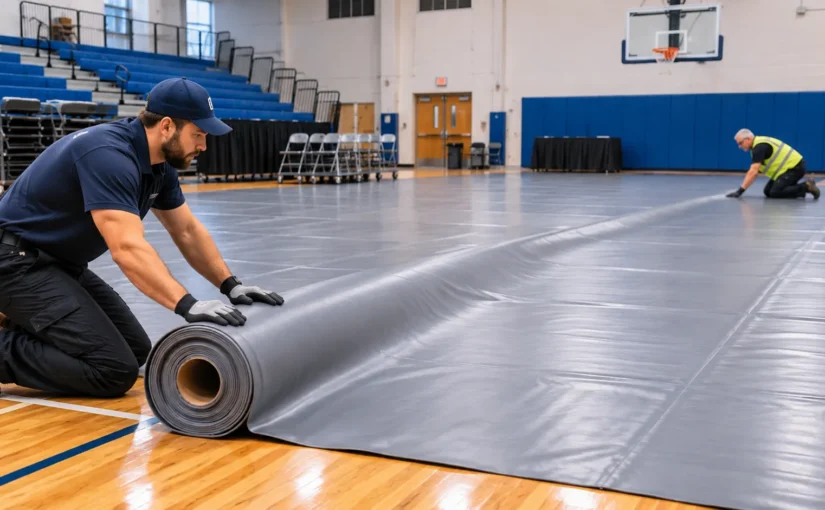
A basketball gym floor covering protects an existing court during non-athletic events such as graduation ceremonies, assemblies, concerts, and trade shows.
The main options are reinforced vinyl rolls, carpet rolls, and large protective carpet tiles. Each offers different levels of convenience, durability, and protection.
For most schools and recreation centers, the right choice depends on event frequency, floor material, budget, and available storage space.
This guide compares gym floor covers, explains US costs, and shows how to protect your basketball court without damaging its playing surface.
What Is a Basketball Gym Floor Covering?
A basketball gym floor covering is a temporary protective layer placed over an existing hardwood or synthetic gymnasium floor.
It helps reduce scuff marks, scratches, and everyday wear from heavy foot traffic, tables, and chairs during non-athletic events.
Unlike permanent basketball flooring, protective gym floor coverings are removed before sports resume.
Important: Temporary event covers are generally not designed for basketball play. Remove them before athletic activities unless the manufacturer specifically approves the covering for that use.
The Maple Flooring Manufacturers Association (MFMA) explains that covers provide additional protection for multipurpose hardwood courts, although they aren’t necessary for every event.
Types of Basketball Gym Floor Covering
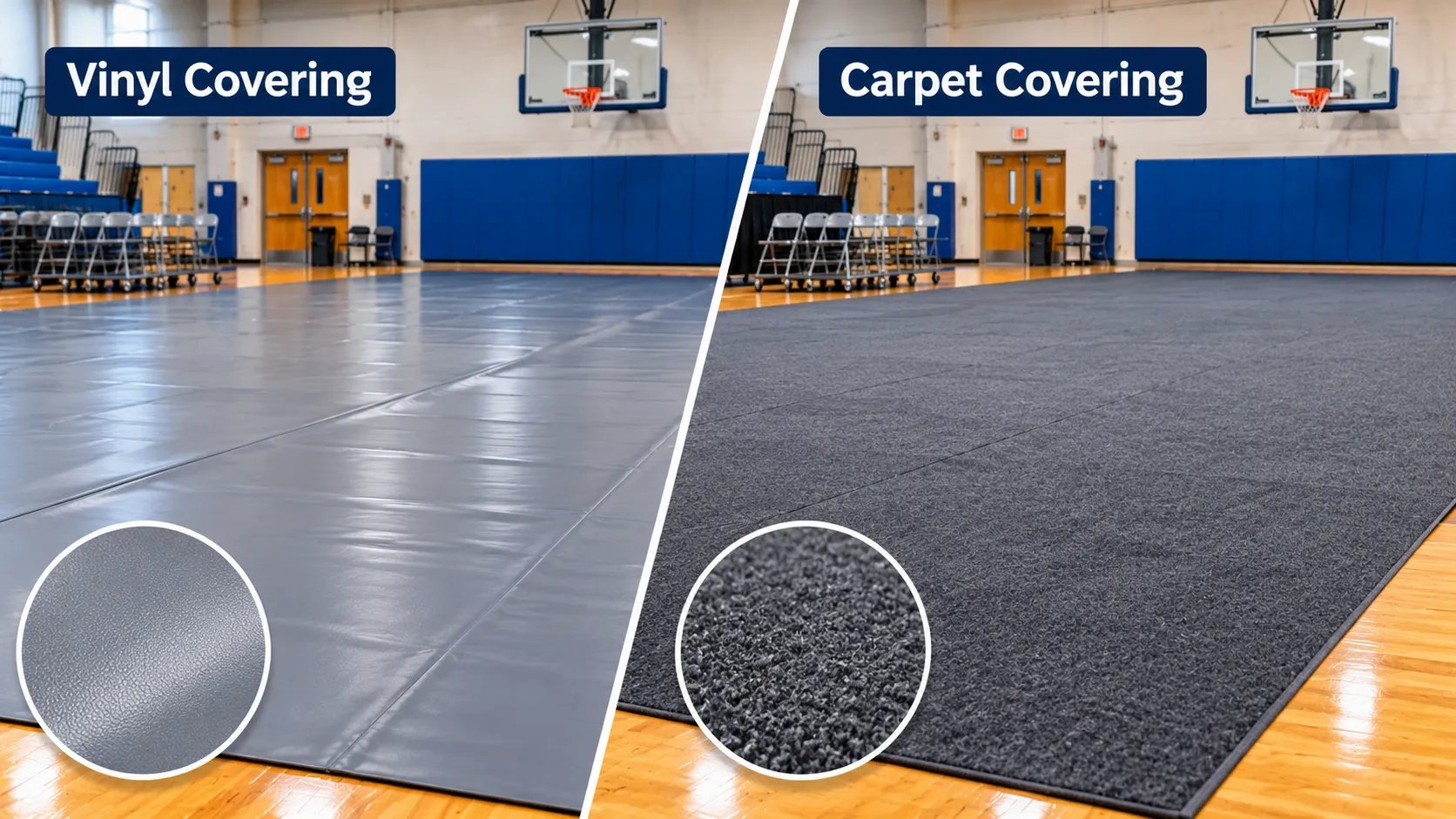
The three main systems are vinyl gym floor covers, carpet rolls, and loose-laid carpet tiles.
| Covering Type | Best Suited For | Main Consideration |
|---|---|---|
| Reinforced vinyl rolls | Schools hosting regular events | Requires overlapping sections and appropriate tape |
| Carpet rolls | Ceremonies, concerts, and formal events | Requires vacuuming and suitable storage |
| Protective carpet tiles | Multipurpose gyms needing flexible layouts | More individual pieces to handle |
| Courtside runners | Entrances and bench areas | Protects selected areas rather than the entire floor |
1. Reinforced Vinyl Gym Floor Covers
Vinyl gym floor covers are among the most common temporary protection systems.
They typically use PVC-coated reinforced fabric supplied in large rolls. Staff unroll the material across the basketball court and connect sections according to the manufacturer’s instructions.
These gym floor tarps are useful for graduation ceremonies, assemblies, and events involving large numbers of chairs.
Advantages include straightforward spill cleanup, reusable construction, and different material weights.
However, waterproof vinyl material does not guarantee that liquid cannot pass through seams.
2. Carpet Rolls
Carpet rolls provide a softer, more finished appearance for concerts, banquets, and formal events.
They typically combine a carpet surface with a protective backing.
Carpet can also help reduce noise from footsteps and moving chairs.
Unlike vinyl covers, carpet rolls require vacuuming and may need deeper cleaning. They must dry completely before storage.
3. Protective Carpet Tiles
Large carpet tiles offer flexible floor protection without requiring long rolls.
Products such as Greatmats protective carpet tiles are placed directly beside one another.
These protective tiles are not necessarily interlocking gym floor tiles. Many have straight edges and require no adhesive.
They can be useful when a facility needs to protect different sections of its gymnasium for different events.
However, covering an entire basketball court may require hundreds of tiles and several storage carts.
4. Courtside Runners and Localized Protection
Courtside runners protect smaller areas, including entrances, bench areas, and frequently used walking routes.
They can be a practical option when full-floor coverage isn’t necessary.
However, runners won’t protect an unprotected floor elsewhere in the gym. Facility managers should consider where guests, furniture, and equipment will actually travel.
How to Choose the Right Basketball Gym Floor Covering
Start with the existing floor material.
For a hardwood floor, confirm that the covering’s backing and installation method are approved by the floor and finish manufacturers.
The MFMA also recommends waiting until a new floor finish has fully cured before placing protective covering over it.
Synthetic floors require separate checks. Some rubber-backed products can stain certain synthetic surfaces.
Next, consider event frequency.
For example, FlooringInc’s vinyl cover guidance recommends:
- 18 oz: Up to approximately six uses annually
- 22 oz: Approximately 6–12 uses annually
- 27 oz: Approximately 13–23 uses annually
- 32 oz: Approximately 24 or more uses annually
These are supplier recommendations, not universal durability ratings.
The ounce figures describe material weight per square yard, not thickness.
For frequent events and repeat deployment, compare tear resistance, backing compatibility, setup speed, and storage requirements rather than relying on weight alone.
How Much Do Basketball Gym Floor Coverings Cost?
Protective gym floor covering prices vary by material, weight, dimensions, and supplier.
The following US prices were documented in the research dossier on November 13, 2026.
| Covering | Example Material Price |
|---|---|
| FlooringInc 18 oz vinyl, 10 × 100 ft | $1,352.99 per roll |
| FlooringInc 22 oz vinyl, 10 × 100 ft | $1,591.99 per roll |
| FlooringInc 32 oz vinyl, 10 × 100 ft | $2,028.99 per roll |
| FlooringInc Eco-Roll carpet | About $1.34/sq ft |
| FlooringInc Eco carpet tiles | $49.99 per tile |
| Greatmats carpet tiles | $69.99 per tile |
These are product examples, not nationwide average prices. Check current prices and availability before ordering.
Sources: FlooringInc vinyl covers, Eco-Roll, and Greatmats tiles.
Additional Equipment and Installation Costs
The covering itself is only part of the investment.
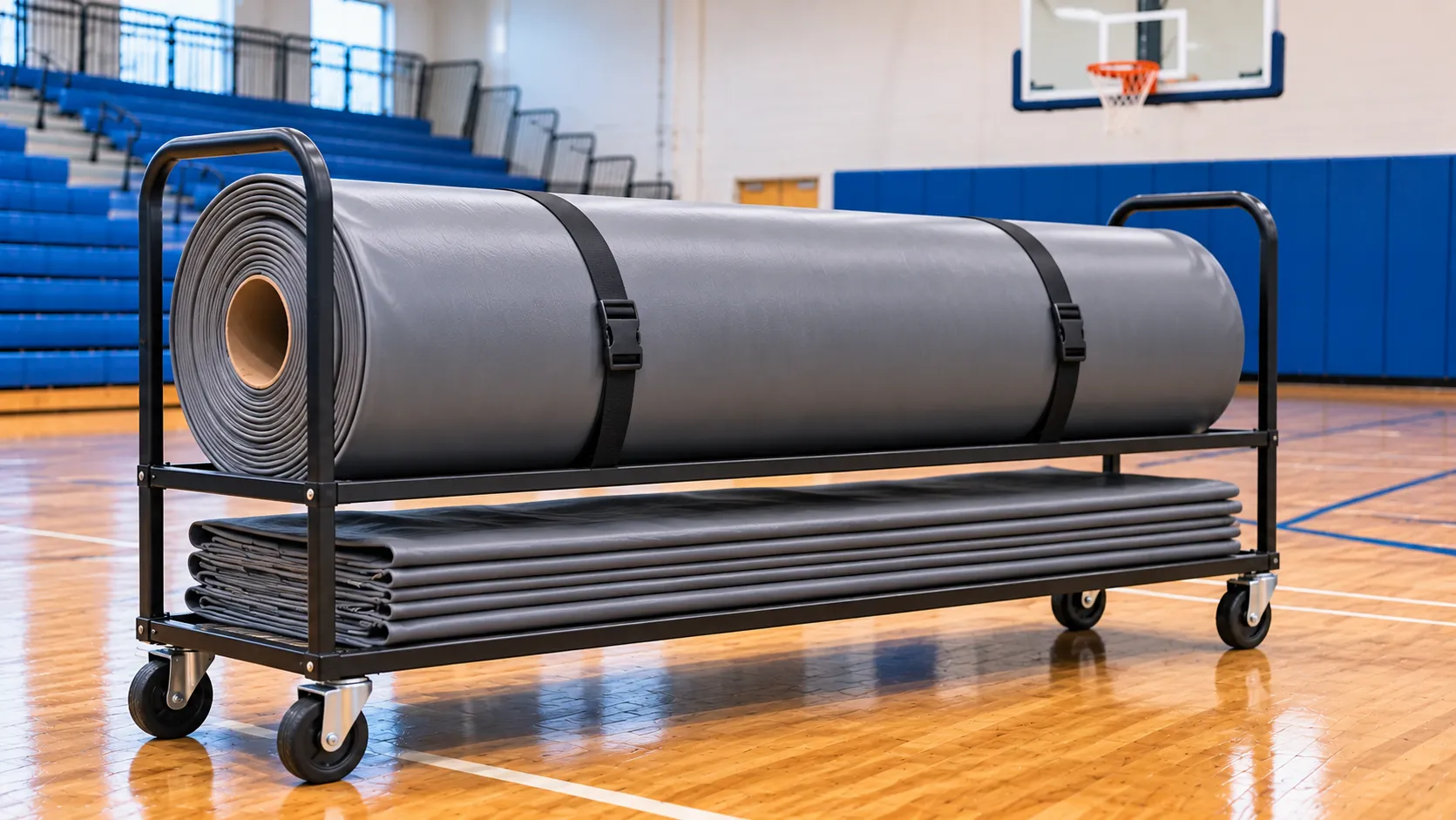
A facility may also need a storage rack, winding equipment, seam tape, cleaning supplies, and delivery arrangements.
For example, the research found a FlooringInc mobile storage rack listed at $4,161.99, although the exact configuration associated with that price wasn’t clear.
Labor costs also depend on the number of workers, the covering system, and how often the gym changes between basketball and other activities.
Always request a complete quote that includes accessories, freight, storage, and any custom branding.
How to Measure a Basketball Gym Floor for Covering
Measure the entire area needing protection, not just the basketball court markings.
Include seating areas, entrances, staging, and equipment routes where necessary.
For a rectangular area:
Length × Width = Floor Area
For example, a 60 × 100-foot event area measures 6,000 square feet.
However, ordering exactly 6,000 square feet of vinyl may not provide enough coverage.
Some vinyl systems require overlapping sections. With 10-foot-wide rolls and 6-inch overlaps, seven 100-foot strips would cover the example width.
That means purchasing 7,000 nominal square feet before any approved trimming.
Carpet rolls and tiles may use different seam arrangements. Ask the supplier for a layout plan before ordering.
For more information about regulation playing areas and clearance, see our basketball court dimensions guide.
How to Install Gym Floor Coverings
Follow the instructions for your specific protective covering system.
- Clean the court. Remove dust, grit, moisture, and debris using floor-approved cleaning methods. Our basketball court cleaner guide explains which products and methods suit different playing surfaces.
- Inspect the covering. Check for tears, damaged backing, and worn accessories.
- Position the material. Roll out vinyl or carpet sections, or place protective tiles according to the layout.
- Secure the seams. Use only the approved joining method and tape.
- Inspect the finished surface. Check for loose edges, wrinkles, trip hazards, and blocked exits.
- Remove carefully. Clean and dry the covering before returning it to storage.
Never assume that ordinary adhesive tape is safe to apply directly to a finished hardwood basketball court.
If you’re planning a new court or renovating an existing one, our basketball court installation guide explains the wider construction process.
Safety and Floor Protection
Gym floor protection involves more than preventing scratches.
Slips, Spills, and Trip Hazards
A covering should remain stable under normal event foot traffic.
Inspect seams, exposed edges, and entrances for slipping or tripping hazards.
Even when a vinyl product is described as waterproof, spills may reach the hardwood through poorly secured seams or edges.
The US Access Board also requires accessible walking surfaces to meet applicable stability and slip-resistance requirements.
Heavy Furniture and Equipment
A flexible protective covering cannot automatically prevent dents from heavy equipment.
Inspect chair legs, furniture caps, and cart wheels before events.
For stages, lifts, and other concentrated loads, consult the floor manufacturer about approved load-spreading protection.
Do not assume that a vinyl cover makes heavy equipment safe for every basketball floor.
Fire Safety
Ask suppliers for documented fire-test results and confirm which requirements apply to your building.
A product advertised as fire-retardant is not automatically approved for every school gym or event.
The relevant classification depends on the product, installation, local rules, and building use.
Cleaning and Storing Gym Floor Covers
Clean the covering after each event using the manufacturer’s recommended method.
Vinyl covers may allow surface wiping, while carpet systems generally require vacuuming.
Inspect for tears, damaged seams, and trapped moisture.
Roll flexible covers rather than folding them when the manufacturer recommends rolled storage. Store protective carpet tiles flat when specified.
Before returning the basketball court to athletic use, inspect the exposed floor for debris, moisture, and damage.
Avoid leaving hardwood covered for extended periods. The MFMA warns that prolonged covering can interfere with the wood’s natural moisture balance.
Common Gym Floor Covering Mistakes
Avoid these problems:
- Buying a cover without checking floor compatibility
- Confusing permanent vinyl gym flooring with temporary event protection
- Ordering only the measured floor area without allowing for seams
- Assuming protective carpet tiles always interlock
- Applying unsuitable adhesive directly to hardwood
- Dragging heavy staging or equipment across flexible coverings
- Ignoring storage rack dimensions and door access
- Storing wet carpet or vinyl
- Leaving hardwood covered longer than recommended
A reliable protection system includes the covering, installation procedure, handling equipment, and maintenance plan.
Frequently Asked Questions
How Much Does a Basketball Gym Floor Cost?
A complete basketball gym floor can cost substantially more than temporary floor protection because it involves the playing surface, subfloor, installation, and potentially structural preparation.
Temporary protective coverings are a separate purchase. Documented examples include vinyl rolls costing approximately $1,353–$2,029 per 1,000-square-foot roll, depending on the selected weight.
What to Cover a Gym Floor With?
Use a temporary covering specifically approved for your existing gym floor.
Reinforced vinyl rolls are a practical option for regular events. Carpet rolls suit formal occasions, while large protective carpet tiles offer flexible layouts.
What Material Is Used for NBA Court Flooring?
NBA basketball courts commonly use hardwood playing surfaces, particularly hard maple.
This is different from a temporary basketball gym floor covering, which protects an existing playing surface during non-athletic events.
What Is the Best Flooring to Put in a Gym?
The best flooring depends on the gym’s intended activities.
A dedicated basketball court may benefit from a properly engineered hardwood sports floor. A multipurpose facility may consider hardwood or an approved synthetic sports flooring system.
If the gym already has a suitable basketball floor, a temporary protective covering is generally more relevant than replacing the playing surface just to host occasional events.
Final Thoughts
The best basketball gym floor covering depends on the existing court, event frequency, and storage requirements.
Reinforced vinyl rolls are a practical starting point for regular school events. Carpet rolls offer a more formal appearance, while protective carpet tiles provide flexible coverage.
Before buying, confirm compatibility with the basketball floor, calculate the required coverage, and include storage equipment and installation costs in your budget.
A properly selected and maintained covering can help protect the court while allowing the facility to host other activities.
3 thoughts on “Basketball Gym Floor Covering | Types, Costs & Protection”
Comments are closed.