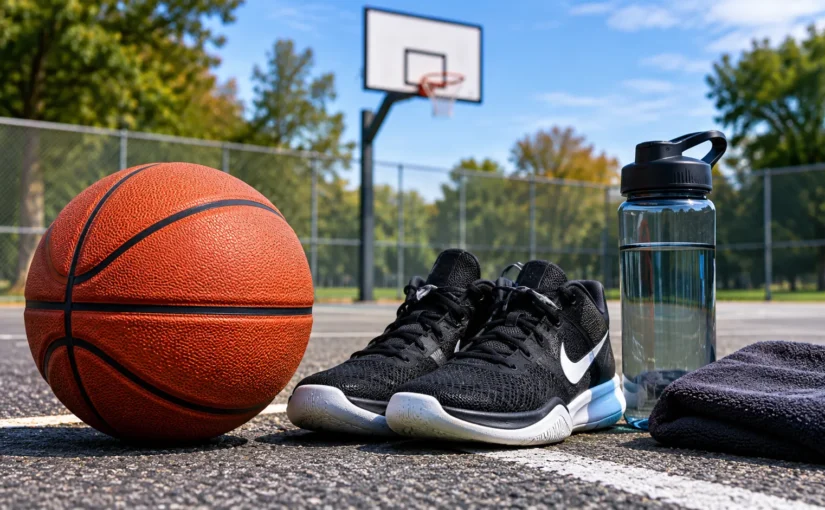
Starting basketball doesn’t require expensive gear. A basic basketball equipment list includes a suitable basketball, supportive shoes, comfortable athletic clothing, drinking water, and access to a safe court with a hoop.
You don’t need to own a basketball hoop or buy specialist training equipment to get started. Public courts and organized programs may already provide much of what you need.
This guide explains the essentials, basketball sizes, optional accessories, and realistic US equipment costs.
Basketball Equipment Checklist: What Do You Really Need?
The following checklist separates essential basketball equipment from optional purchases.
| Equipment | Priority | Do You Need to Buy It? |
|---|---|---|
| Basketball | Essential | Only if you cannot borrow one |
| Basketball shoes | Essential for regular play | If your current shoes are unsuitable |
| Athletic clothing and socks | Essential | Existing clothes may work |
| Water bottle | Essential practical item | Any suitable bottle works |
| Basketball hoop and court | Essential for shooting and games | Public courts are an alternative |
| Basketball pump | Useful | Can be borrowed |
| Mouthguard | Recommended protection | Depends on individual and league needs |
| Training cones | Optional | Court markings can work |
| Dribbling goggles | Optional | Not necessary for beginners |
| Home basketball hoop | Optional | Only if you want to practice at home |
| Scoreboard and ball cart | Team equipment | Not needed for individual players |
Best starting point: Use a public court, wear suitable shoes, and choose a basketball that matches your age and playing surface.
Essential Basketball Equipment List for Beginners
1. Basketball
A basketball is the most important piece of equipment for practicing shooting, passing, and ball handling.
Choose one based on three factors:
- Size: Match your age, playing category, or league requirements.
- Surface: Outdoor basketballs are designed for rougher courts.
- Material: Rubber and outdoor-rated composite covers are practical for pavement.
For beginners playing mainly outdoors, a durable outdoor basketball is usually the most sensible purchase.
Avoid buying an expensive indoor-only basketball if you mostly practice on asphalt or concrete.
2. Basketball Shoes
A good pair of basketball shoes should provide a secure fit, suitable traction, and comfort during quick movements.
Look for:
- A secure heel without excessive slipping.
- Comfortable toe space.
- Traction suitable for your court.
- Cushioning that feels comfortable.
- An outsole in good condition.
You don’t need expensive signature shoes to start playing.
Basketball involves frequent stopping, turning, and sideways movement. Running shoes are primarily designed for forward movement, so they may not be the best choice for regular basketball.
However, shoe suitability depends on the specific model, fit, and playing conditions.
3. Athletic Clothing and Socks
Comfortable athletic clothing allows you to run, jump, and move freely.
A basic outfit includes a breathable shirt, athletic shorts or pants, and comfortable socks.
A supportive sports bra may also be important where needed.
You don’t need professional jerseys, compression sleeves, or matching basketball outfits for casual games.
Organized teams may have specific uniform requirements.
4. Water Bottle
Bring drinking water to practices and games.
A reusable water bottle is sufficient. Expensive sports bottles and sports drinks aren’t essential for beginners.
During outdoor training, especially in hot weather, take appropriate breaks and monitor conditions.
The CDC’s heat safety guidance explains why hydration, rest, and adjusting activity matter.
5. Basketball Hoop and Court Access
You need access to a suitable hoop and playing area, but you don’t necessarily need to own them.
Public parks, recreation centers, schools, and basketball clubs may provide court access.
Check that the playing surface is free from dangerous debris, standing water, and obvious hazards.
For beginners, regular access to a safe court is more valuable than buying a costly home training setup.
What Size Basketball Do You Need?
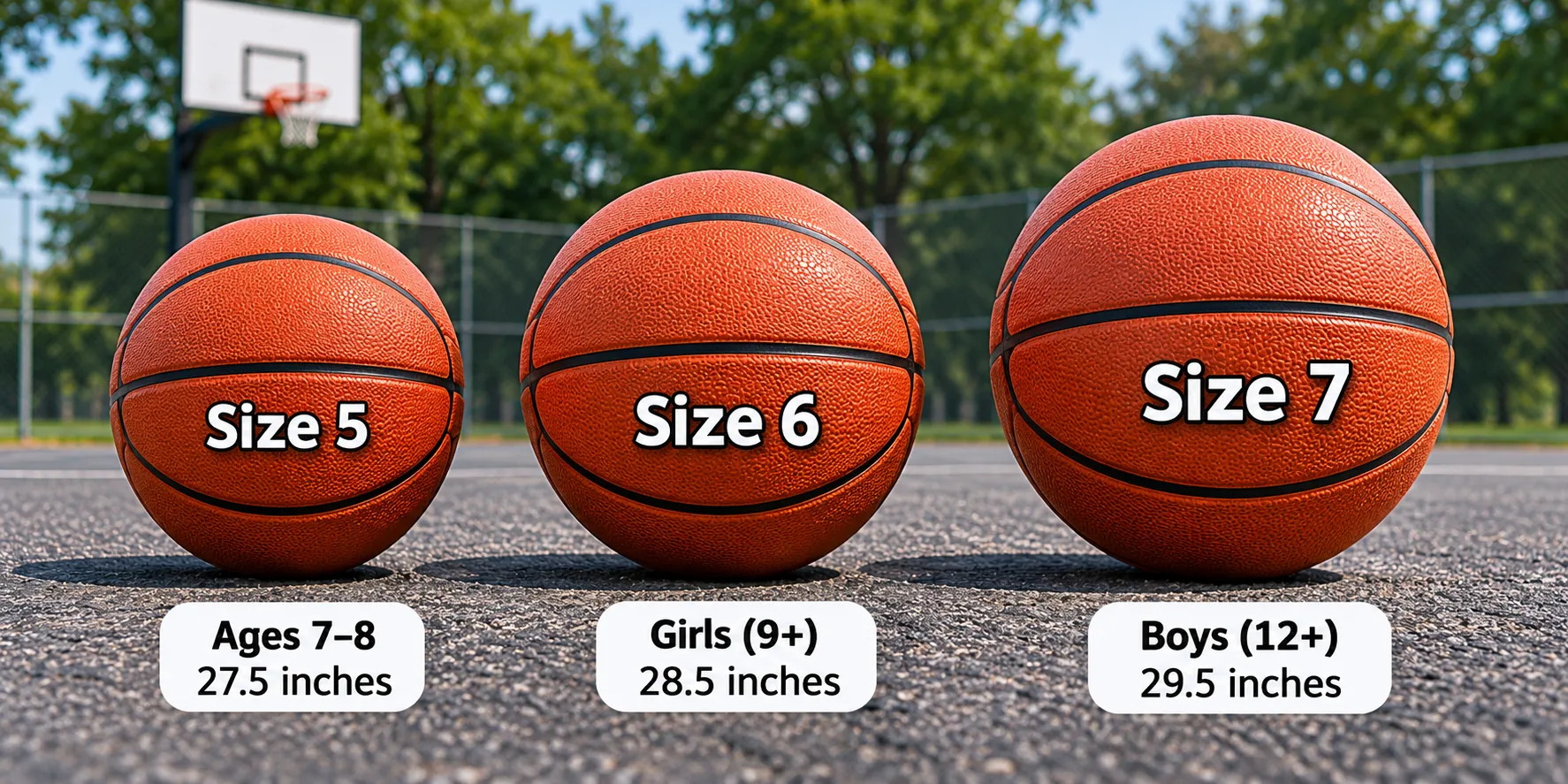
Basketball sizes vary by age and playing category.
The following table uses USA Basketball’s youth development guidelines.
| Playing Group | Ball Size | Circ. (In) | Hoop Height |
|---|---|---|---|
| Ages 7–8, boys and girls | Size 5 | 27.5 inches | 8 feet |
| Ages 9–11, boys and girls | Size 6 | 28.5 inches | 9 feet |
| Ages 12–14, girls | Size 6 | 28.5 inches | 10 feet |
| Ages 12–14, boys | Size 7 | 29.5 inches | 10 feet |
| High school girls | Size 6 | 28.5 inches | 10 feet |
| High school boys | Size 7 | 29.5 inches | 10 feet |
These are developmental recommendations, not mandatory rules for every US basketball league.
For organized competition, check your league’s equipment requirements before purchasing a ball.
Adults commonly use size 7 for men’s basketball and size 6 for women’s basketball.
You can learn more about age-appropriate rim heights in our basketball hoop height guide.
Indoor vs. Outdoor Basketball Equipment
Your playing surface affects which basketball equipment you should choose.
| Equipment | Indoor Basketball | Outdoor Basketball |
|---|---|---|
| Basketball | Indoor-rated composite or leather | Rubber or outdoor-rated composite |
| Shoes | Suitable traction on clean gym floors | Grip and outsole durability for pavement |
| Court | Hardwood or indoor sports flooring | Asphalt, concrete, or outdoor sports surfaces |
| Maintenance | Keep equipment clean and dry | Remove dirt and inspect wear regularly |
An indoor-only basketball can wear faster on rough outdoor pavement.
For example, Wilson identifies its Evolution basketball as an indoor ball, while its NBA DRV model is designed for outdoor use.
If you regularly play both indoors and outdoors, consider a basketball specifically rated for both surfaces.
Store basketballs away from excessive heat and moisture. Follow the manufacturer’s inflation instructions rather than assuming every ball needs the same air pressure.
Optional Basketball Training Equipment and Training Aids
Once you have the essentials, additional basketball gear can make certain activities more convenient.
However, most beginners don’t need specialist training aids immediately.
Basketball pump and needle: Useful for maintaining your ball’s air pressure. A pressure gauge helps you follow the manufacturer’s recommended range.
Training cones: Help organize dribbling and footwork drills. Existing court markings can often serve the same purpose.
Agility ladder: Provides a structured way to practice footwork patterns, but isn’t required for basketball development.
Dribbling goggles: Can encourage players to practice handling the ball without constantly looking down.
Mouthguard: Offers dental protection during contact play. Check your league’s requirements and choose a properly fitted product.
Knee pads and ankle supports: May be useful for particular players, but aren’t universal requirements. Seek appropriate professional guidance for injury-related supports.
The American Academy of Pediatrics’ basketball safety guidance explains the role of protective equipment, including mouthguards, knee pads, and ankle supports.
Weighted basketballs, shooting machines, and expensive ball-return systems can wait until you have a specific training need.
For more options, see our basketball training equipment guide.
Do Beginners Need Their Own Basketball Hoop?
No. A home basketball hoop is convenient, but public courts are often enough for beginners.
If you decide to purchase one, consider these options:
- Portable hoop: Can be repositioned and typically uses a weighted base.
- In-ground hoop: Permanently installed and requires suitable ground preparation.
- Wall-mounted hoop: Requires a compatible supporting structure and correct installation.
Choose a system based on available space, adjustment range, and manufacturer instructions.
Portable basketball goals must have their bases filled or weighted exactly as specified. Never assume a portable hoop is safe for dunking or hanging from the rim.
Our best portable basketball hoop guide explains what to consider before buying.
How Much Does Beginner Basketball Equipment Cost?
You can start playing basketball without spending hundreds of dollars.
The following are manufacturer-listed US price examples recorded during November 2026 research. They aren’t guaranteed prices or nationwide averages.
| Equipment Example | Listed Price |
|---|---|
| Wilson NBA DRV Outdoor Basketball | $16.95 |
| Spalding Street Outdoor Basketball | $29.99 |
| Wilson NBA DRV Pump Kit | $16.95 |
| Nike Precision 7 Basketball Shoes | $80 regular price |
| Lifetime 44-inch Portable Hoop | $249.99 |
Beginner Budget Examples
Budget 1: Existing shoes and public court
Buy a $16.95 outdoor basketball. Borrow a pump when needed.
Estimated equipment spending: $16.95.
Budget 2: New basketball and shoes
Using the listed regular prices for the Wilson ball and Nike shoes:
Estimated equipment spending: $96.95.
Budget 3: Basic home hoop setup
Combine the listed Lifetime portable hoop with the Wilson outdoor basketball.
Equipment subtotal: $266.94.
The home setup excludes any additional ballast, delivery, taxes, assembly supplies, or surface preparation.
These examples show why checking existing equipment and court access before shopping can save money.
Basketball Training Setup for Coaches and Teams
Coaches and organized basketball programs need additional equipment beyond an individual player’s essentials.
Common examples include:
- Multiple basketballs in appropriate sizes.
- Cones and practice markers.
- Reversible training vests.
- Coaching clipboard and whistle.
- Timer or stopwatch.
- Ball pump and spare needles.
- First-aid arrangements.
- Ball rack or storage equipment.
- Scorebook and scoreboard for organized games.
Some competitions also require specific game clocks, possession indicators, or other equipment.
These items aren’t purchases an individual beginner needs to make.
Common Basketball Equipment Buying Mistakes
A simple basketball equipment list can help beginners avoid unnecessary purchases and focus on the essentials.
Buying the wrong basketball size: Check age recommendations and actual league rules.
Using an indoor-only basketball outside: Choose a ball rated for your main playing surface.
Choosing shoes based only on appearance: Fit, comfort, and traction matter more.
Buying too many training aids: Start with basic basketball drills before purchasing specialist equipment.
Ignoring hoop safety: Follow the exact manufacturer’s assembly, anchoring, and ballast instructions.
Spending heavily before checking court access: You may already have access to suitable facilities.
Frequently Asked Questions
What Accessories Do Basketball Players Need?
Useful accessories include a basketball pump, water bottle, athletic bag, and suitable protective equipment. Training cones and other aids are optional.
What Should You Look for When Buying a Basketball?
Check the correct ball size, intended playing surface, cover material, durability, and price. Your league’s rules take priority for organized competition.
Can You Play Basketball in Running Shoes?
Some running shoes may be adequate for light, casual activity, but basketball shoes are generally better suited to frequent lateral movements, stops, and changes of direction.
What Equipment Do You Need for Basketball Practice?
A suitable basketball, appropriate footwear, comfortable clothing, water, and access to a safe hoop and court are enough for basic practice. Coaches may use additional equipment to organize group drills.
Final Thoughts
A beginner basketball equipment list doesn’t need to include expensive shoes, shooting machines, or a home basketball system.
Start with a correctly sized basketball, suitable footwear, comfortable clothing, drinking water, and access to a safe court.
Add training equipment only when it serves a clear purpose.
The right basic equipment, combined with regular practice, is a better starting point than buying accessories you may never use.
One thought on “Basketball Equipment List | Essentials for Beginners”
Comments are closed.