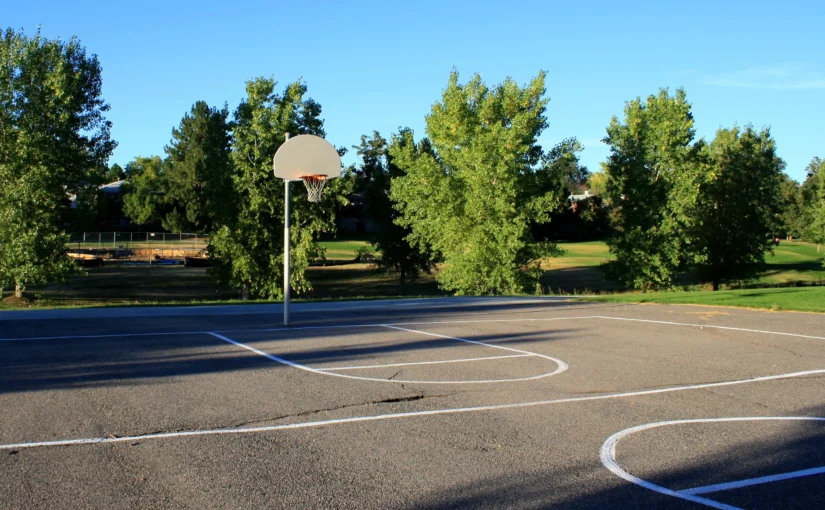
An asphalt basketball court is a popular option for outdoor basketball because it provides a firm playing surface and can cost less to install than some concrete court systems.
Asphalt courts are suitable for backyard basketball, schools, parks, and recreational facilities. They can be left as bare asphalt or finished with an acrylic sports coating for improved appearance and a more consistent playing surface.
However, asphalt courts can develop cracks, require maintenance, and become hot in direct sunlight.
This guide explains asphalt basketball court costs in the US, the installation process, advantages and disadvantages, and how asphalt compares with concrete and modular sports tiles.
What Is an Asphalt Basketball Court?
An asphalt basketball court is an outdoor playing area built using compacted asphalt pavement over a prepared foundation.
Asphalt is also commonly called blacktop.
A typical asphalt basketball court has several layers:
- Subgrade: The prepared natural soil supporting the court.
- Aggregate base: Compacted crushed stone that provides structural support.
- Asphalt layers: Compacted asphalt that creates a stable playing surface.
- Acrylic coating: An optional sports coating that adds color and playing texture.
- Court markings: Painted basketball lines showing the playing boundaries.
A basketball hoop is installed separately, usually with a dedicated concrete foundation for an in-ground system.
The Wisconsin Asphalt Pavement Association’s 2022 Sport Court Design Guide explains how groundwork, drainage, and asphalt construction affect court performance. The guidance is regional, not a universal US specification.
Bare Asphalt vs Acrylic-Coated Asphalt
You can play basketball on bare asphalt if the surface is smooth, stable, and suitable for play.
However, bare asphalt may feel rougher and cause more wear on basketballs and shoes.
Acrylic sports coatings provide a finished surface with controlled texture and color.
They also allow court owners to create custom basketball court designs.
An acrylic coating does not repair a failing asphalt foundation. Structural problems must be addressed before applying the coating.
How Much Does an Asphalt Basketball Court Cost?
An asphalt basketball court can cost several thousand dollars for a small installation or tens of thousands for a professionally constructed full court.
The total depends on court size, site preparation, asphalt thickness, drainage, sports coatings, and equipment.
Asphalt Basketball Court Cost by Size (Full Court vs Half Court)
The following published US estimates illustrate the range of possible project budgets. They come from different providers and do not represent a national average.
| Example court size | Area | Published estimate | Source |
|---|---|---|---|
| Compact asphalt court, 30 × 28 ft | 840 sq ft | $8,000–$18,000 | AsphaPro |
| Small backyard court, 30 × 30 ft | 900 sq ft | $15,000–$25,000 | Precision Sports CT |
| Larger half court, 42 × 50 ft | 2,100 sq ft | $25,000–$45,000 | Precision Sports CT |
| Full court, 94 × 50 ft | 4,700 sq ft | $35,000–$75,000 | AsphaPro |
| Full court, 94 × 50 ft | 4,700 sq ft | $60,000–$80,000+ | Precision Sports CT |
Sources: AsphaPro’s asphalt basketball court cost examples and Precision Sports CT’s 2026 basketball court cost guide. AsphaPro gives asphalt-focused estimates; Precision’s estimates cover broader professional court installations in Connecticut. They are not directly comparable. Check whether each quote includes preparation, surfacing, hoops, fencing, lighting and other extras.
A 30 × 30-foot backyard court is a compact recreational area, not a regulation half court.
Likewise, the 94 × 50-foot dimensions describe an NBA playing area, not necessarily the complete paved area required for safe play.
Asphalt Basketball Court Installation Cost Breakdown
The main expenses include:
| Component | What affects the cost |
|---|---|
| Site preparation | Excavation, soil conditions, grading, and access |
| Aggregate base | Material depth, compaction, and ground stability |
| Asphalt paving | Court area, asphalt mixture, thickness, and labor |
| Acrylic top coat | Surface preparation, repairs, and coating system |
| Court lines | Basketball layout, markings, and customization |
| Basketball hoop | Portable or permanent system and installation |
| Optional extras | Fencing, lighting, drainage, and landscaping |
A contractor may quote only for asphalt paving, while another includes a complete basketball court.
Always check what is included before comparing prices.
What Affects the Total Cost?
The biggest cost factors are:
- Court size: Larger courts require more asphalt, groundwork, and coating materials.
- Ground conditions: Soft soil, slopes, and poor drainage can increase construction costs.
- Location: Labor rates and material delivery costs vary across the US.
- Playing surface: A basic asphalt court generally requires less finishing work than a multi-layer acrylic system.
- Equipment: Permanent basketball hoops, fencing, and lighting increase the budget.
For a broader explanation of court construction expenses, see our basketball court installation guide.
Is Asphalt Good for a Basketball Court?
Yes. Asphalt can provide a suitable outdoor basketball surface when it is correctly constructed and maintained.
It offers a firm surface for basketball bounce and can support recreational or competitive play.
However, its performance depends on the quality of the foundation and surface finish.
Advantages of Asphalt Basketball Courts
1. Potentially lower installation costs
Asphalt can be more affordable initially than some concrete court systems, although local contractor quotes are needed for an accurate comparison.
2. Suitable for different court sizes
Asphalt works for small backyard shooting areas, half courts, and full-size outdoor basketball courts.
3. Multiple surface finishes
Owners can choose bare asphalt, acrylic coatings, or compatible modular sports tiles.
4. Repair options
Some cracks and surface defects can be repaired without rebuilding the entire court.
5. Consistent basketball bounce
A properly installed, smooth asphalt surface can provide reliable ball bounce for outdoor basketball. Traction depends on its surface texture, condition and any sports coating used.
Disadvantages of Asphalt Basketball Courts
1. Cracking
Asphalt may crack because of soil movement, poor drainage, weather, or aging.
2. Heat absorption
Dark asphalt absorbs sunlight and can become uncomfortable during hot weather.
3. Hard playing surface
Asphalt offers little cushioning compared with specialized resilient sports flooring.
4. Surface wear
Bare asphalt can become rough, while acrylic coatings gradually wear and require renewal.
5. Maintenance
Court owners must monitor cracks, drainage, surface wear, and other damage.
Asphalt is a practical choice for many outdoor courts, but it is not automatically the best surface for every property.
Asphalt Basketball Court Sizes and Dimensions
Before installing asphalt, determine how much space is available and how the court will be used.
| Court type | Dimensions | Playing area |
|---|---|---|
| Small shooting area | 20 × 20 ft | 400 sq ft |
| Compact backyard court | 30 × 30 ft | 900 sq ft |
| Custom half court | 30 × 50 ft | 1,500 sq ft |
| Larger half-court example | 42 × 50 ft | 2,100 sq ft |
| High school court | 84 × 50 ft | 4,200 sq ft |
| NBA court | 94 × 50 ft | 4,700 sq ft |
The first four examples are recreational planning sizes, not universal regulation dimensions. The high school figure is a commonly specified optimum playing area.
The NBA’s official court dimensions confirm the professional playing area of 94 × 50 feet.
Remember that the paved area may need to extend beyond the court markings.
Extra space helps keep players away from fences, walls, basketball hoop supports, and other obstacles.
How to Build an Asphalt Basketball Court
Building an asphalt basketball court requires more than laying asphalt on the ground.
Proper preparation reduces the risk of cracking, uneven surfaces, and drainage problems.
1. Plan the Court and Assess the Site
Start by choosing the court dimensions and basketball hoop location.
Check the available space, ground slope, soil conditions, and access for construction equipment.
Also investigate local permits, property boundaries, and drainage requirements.
2. Prepare the Ground and Drainage
Remove vegetation, topsoil, roots, and unsuitable materials before preparing the foundation.
The ground must be graded and compacted to the specified design. A court needs a controlled slope for drainage rather than a perfectly level surface.
Make sure the design includes space beyond the marked playing area for safe movement and the basketball hoop support.
Drainage is especially important because standing water can damage the pavement and affect player safety.
3. Install the Aggregate Base
A layer of compacted crushed stone supports the asphalt.
The required thickness depends on soil conditions, climate, and the court’s design.
Poorly compacted material can settle and cause cracks in the playing surface.
4. Lay and Compact the Asphalt
Contractors install the specified asphalt mixture in layers.
A fine-graded upper course helps create a smoother surface suitable for basketball.
Proper compaction and surface grading are essential.
Uneven asphalt can affect ball bounce and create areas where water collects.
5. Apply the Acrylic Sports Coating
Once the new asphalt has met the required curing conditions, contractors can prepare it for an acrylic sports coating.
The process may involve cleaning, repairing defects, applying an acrylic resurfacer, and adding colored coatings.
The exact application method depends on the product.
6. Add Court Markings and Equipment
Basketball lines are measured and painted according to the intended court layout.
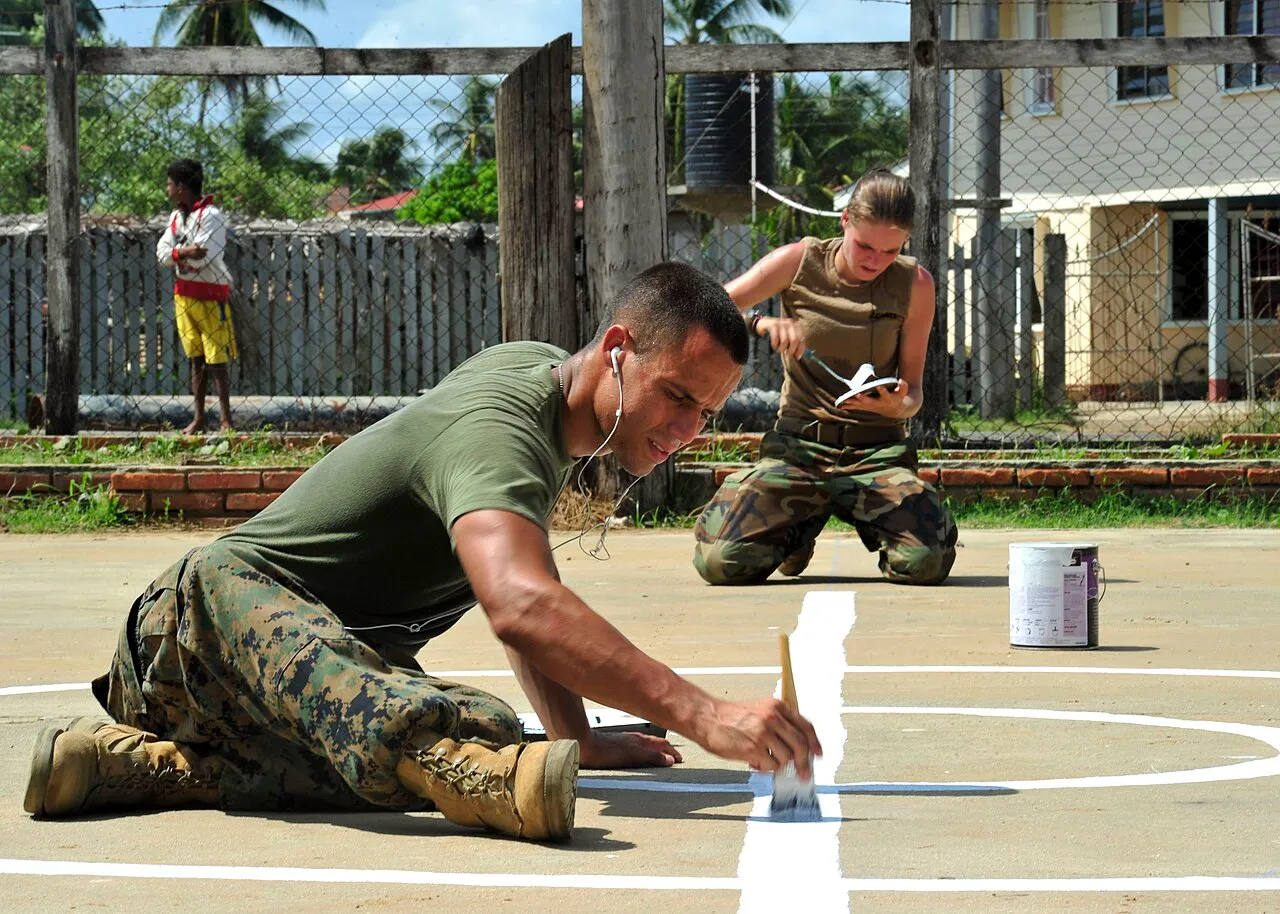
Install the basketball hoop using the manufacturer’s foundation and assembly instructions.
Complete the project with any required fencing, padding, or lighting.
Asphalt Thickness, Drainage, and Curing
Three important construction details affect how well an asphalt basketball court performs.
How Thick Should an Asphalt Basketball Court Be?
There is no single asphalt thickness suitable for every basketball court.
The Wisconsin Asphalt Pavement Association’s 2022 guide describes different asphalt layer thicknesses depending on the mixture used.
It also recommends at least 4 inches of compacted aggregate base for the conditions covered by its guidance, increasing to 8 inches for poor or questionable soil.
These are regional technical recommendations, not universal US construction requirements.
A contractor should select the pavement structure based on the site’s soil, drainage, climate, and expected use.
Why Drainage Matters
An asphalt basketball court should have a smooth, consistent plane with enough slope to drain rainwater away.
The Wisconsin guide describes a surface slope of approximately 0.83% to 1%.
That represents about 5–6 inches of elevation change across 50 feet.
However, the correct drainage design depends on the property and local requirements.
Poor drainage can contribute to cracks, settlement, puddles, and surface deterioration.
How Long Does Asphalt Need to Cure?
New asphalt needs an appropriate waiting period before acrylic sports coatings are applied.
SportMaster specifies 14–30 days for its Acrylic Resurfacer, while the Wisconsin Asphalt Pavement Association recommends at least 45 days before applying a wearing or playing surface.
These recommendations are different because they come from different technical sources.
Follow the selected coating manufacturer’s current instructions and the project’s construction specifications.
The waiting period before coating is also different from the time required before the completed court can be used.
Asphalt vs Concrete vs Modular Basketball Courts
Asphalt is not the only option for outdoor basketball.
Concrete and modular sports tiles are also commonly considered.
| Feature | Asphalt | Concrete | Modular sports tiles |
|---|---|---|---|
| Initial cost | Often lower | Can be higher | Tiles plus suitable base |
| Ball bounce | Consistent on smooth surfaces | Consistent on smooth surfaces | Depends on tile system |
| Cracking | Possible | Possible | Base can still crack |
| Maintenance | Crack repairs and possible recoating | Joint/crack care and possible recoating | Cleaning and tile inspections |
| Drainage | Surface slope | Surface slope | Through some tiles, then across base |
| Playing comfort | Hard surface | Hard surface | Depends on product |
Asphalt vs Concrete Basketball Courts
Concrete courts can provide a durable foundation, but construction costs depend on the slab design and site conditions. Both asphalt and concrete can develop cracks from movement, weather, or drainage problems.
Both can support compatible acrylic sports coatings. Compare equivalent local quotes for the same court dimensions, foundation requirements, drainage, finish and equipment rather than comparing pavement-only prices with complete court projects.
The best option depends on construction costs, climate, maintenance expectations, and local contractor expertise.
Asphalt vs Modular Sports Tiles
Modular basketball court tiles are one type of synthetic court system and are usually installed over a suitable hard foundation.
Some modular tile systems allow installation over asphalt and offer different colors, logos, and multi-sport layouts. Check the specific tile manufacturer’s approved base and installation requirements.
However, tiles do not automatically fix poor drainage or structural problems underneath. Some perforated tiles let water pass through, but the foundation still needs suitable drainage. Follow the manufacturer’s instructions for expansion clearance and cleaning.
Learn more about these surfaces in our guide to what basketball courts are made of.
Asphalt Basketball Court Maintenance and Lifespan
Regular maintenance helps protect an asphalt basketball court and keeps the playing surface in suitable condition.
Cleaning and Routine Maintenance
Remove leaves, dirt, loose stones, and other debris.
Clean the surface using methods approved by the coating manufacturer.
Keep drainage outlets clear and inspect the court after severe weather.
Repairing Cracks and Surface Damage
Small cracks may be repairable with compatible products.
However, repeated cracking, settlement, or large damaged areas may indicate deeper foundation problems.
These issues should be assessed before applying new coatings.
Recoating vs Resurfacing vs Rebuilding
These terms describe different types of work.
- Recoating: Renewing the existing acrylic playing surface.
- Asphalt resurfacing: Repairing or replacing part of the pavement surface, depending on the project scope.
- Rebuilding: Removing failed pavement and reconstructing the supporting layers when necessary.
A new coating cannot permanently repair a structurally damaged foundation.
How Long Does an Asphalt Basketball Court Last?
There is no guaranteed lifespan for every asphalt basketball court.
Longevity depends on construction quality, weather, drainage, use, and maintenance. There is no reliable universal lifespan for asphalt basketball courts.
The acrylic surface usually needs attention sooner than the underlying asphalt.
SportMaster describes a standard resurfacing cycle of 5–8 years for its acrylic sports surfaces, although actual conditions may require earlier or later work.
DIY vs Professional Asphalt Basketball Court Installation
Some basketball court tasks are suitable for homeowners.
These include planning the layout, measuring available space, selecting equipment, and routine maintenance.
However, installing asphalt usually requires professional paving equipment and experience.
Poor compaction or drainage can lead to expensive repairs.
What to Ask an Asphalt Basketball Court Contractor
Before accepting a quote, ask:
- What are the exact court and paved-area dimensions?
- What site preparation and drainage work is included?
- What asphalt thickness and materials will be used?
- Does the price include acrylic coatings and court lines?
- Is basketball hoop installation included?
- What maintenance and warranty terms apply?
For larger projects, obtain several itemized quotes using the same specifications.
Frequently Asked Questions
Can You Play Basketball on Bare Asphalt?
Yes. Bare asphalt can be used for basketball if it provides a smooth, stable, suitable playing surface.
An acrylic sports coating is optional but can improve the finished appearance and provide a designed playing texture.
Is Asphalt Cheaper Than Concrete?
Asphalt often has a lower initial paving cost, but this is not guaranteed. Long-term costs depend on the full surface system, maintenance, repairs, and replacement needs.
Compare local quotes that include the same site preparation, drainage, playing surface, and equipment.
Can You Paint an Asphalt Basketball Court?
Yes. Use a coating designed for asphalt sports courts.
Ordinary household paint or driveway sealers may not provide the correct playing characteristics or compatibility.
How Long Before You Can Play on New Asphalt?
It depends on the pavement, coating system, weather, and installation specifications.
New asphalt may require a separate waiting period before acrylic coatings can be applied. The finished coating must also cure before play.
Follow the contractor’s and manufacturer’s instructions.
Can You Install Basketball Court Tiles Over Asphalt?
Yes, some modular sports tile systems are designed for installation over suitable asphalt.
The asphalt must meet the manufacturer’s requirements for stability, surface condition, and drainage. See the VersaCourt base options guide for one manufacturer’s specifications.
Final Thoughts
An asphalt basketball court can be a practical option for homeowners, schools, and recreational facilities.
It provides a firm playing surface, supports different court sizes, and offers several finishing options.
However, proper site preparation, drainage, and installation are essential.
For most new asphalt basketball court projects, the best starting point is to compare detailed local contractor quotes that include groundwork, paving, coatings, and basketball equipment.
One thought on “Asphalt Basketball Court | Costs, Pros & Installation”
Comments are closed.