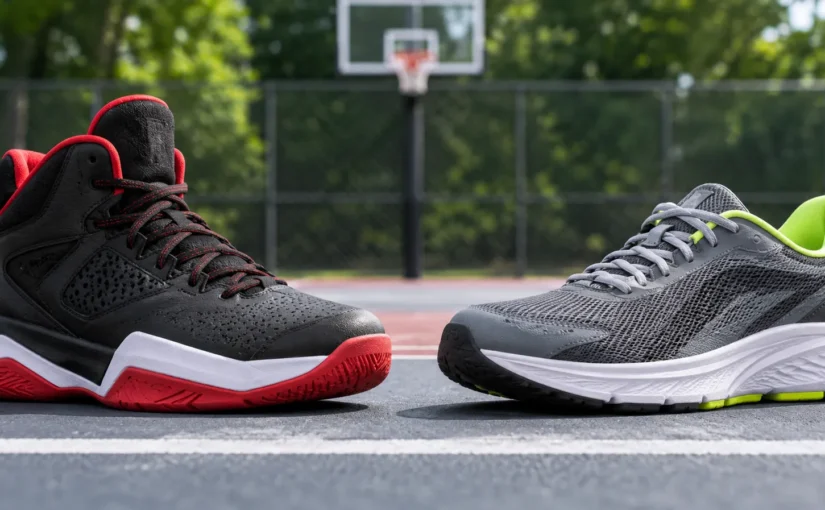
Basketball shoes are fine for short runs, court sprints, and occasional jogging, but they are generally not the best choice for regular or long-distance running. Proper running shoes are designed around repeated forward movement, while basketball shoes prioritize stability, traction, and quick changes of direction.
That does not mean running in basketball shoes is automatically dangerous. Basketball involves plenty of running, and modern basketball footwear can provide substantial cushioning and support.
Running a few laps during basketball practice is different from running several miles on pavement. The longer and more frequently you run, the more useful dedicated running shoes become.
This guide compares both types of athletic footwear, explains when basketball shoes can work for running, and examines what the research says about comfort, performance, and injury risks.
Basketball Shoes vs Running Shoes: What’s the Difference?
Basketball shoes and running shoes share several features. Both need to provide traction, cushioning, and a secure fit.
However, their design choices reflect different sports.
Basketball players regularly sprint, stop, jump, land, and move sideways. A basketball shoe must accommodate these movements while helping the player remain stable.
Most running shoes are built primarily for repeated forward strides. They can vary considerably in cushioning, flexibility, weight, and support depending on their intended use.
Here is how the two types of footwear generally compare.
| Feature | Basketball Shoes | Running Shoes |
|---|---|---|
| Main purpose | Basketball movements, including cuts, jumps, and short sprints | Repeated forward running |
| Cushioning | Designed for court movement and landings | Designed for different running demands |
| Weight | Varies; some models have extra structure and weight | Varies; many models prioritize running efficiency |
| Stability | Often emphasizes side-to-side containment | Usually emphasizes forward-running needs |
| Flexibility | Depends on the shoe’s construction | Varies from flexible trainers to stiff racing shoes |
| Traction | Often uses multidirectional court patterns | Designed for road, trail, track, or other running surfaces |
| Durability | Depends on indoor or outdoor court design | Depends on the intended running surface and shoe |
These are general differences, not fixed rules.
For example, some lightweight basketball shoes weigh less than certain running shoes. Similarly, some running shoes have stiff soles, while some basketball shoes allow considerable forefoot flexibility.
The exact model matters more than its appearance or category alone.
Cushioning and Shock Absorption
Basketball shoes need cushioning because basketball involves repeated jumping, landing, and running.
Many models use thick foam midsoles or other materials intended to absorb impact.
However, more cushioning does not automatically mean a shoe is better for running.
Running involves repeated loading across thousands of steps. Running shoes are designed with this movement in mind, although cushioning systems vary widely between models.
A 2018 study involving 18 male collegiate basketball players examined how running speed and basketball-shoe cushioning affected impact loading and tibial shock.
The researchers found that faster running increased the measured loading. They also found that the most heavily cushioned condition did not consistently produce the lowest loading measurements.
This is important because it challenges the idea that softer or thicker soles must always provide better shock absorption during running.
However, the study did not compare basketball shoes directly against running shoes or measure long-term injury rates.
Weight and Running Performance
Extra weight can affect running performance.
Some basketball shoes contain additional materials around the heel, sides, or midfoot to provide stability during court movements.
That can make certain models feel heavier during sustained running.
However, not every basketball shoe is heavy. Lightweight basketball models exist, and running shoes vary considerably in weight.
Research has found that adding weight to running shoes can affect running economy.
In a 2020 study involving 11 trained runners, researchers tested the effects of added shoe mass on running economy and performance.
Adding 100 grams to each shoe had measurable negative effects under the tested conditions.
That does not establish a specific speed penalty for basketball shoes.
It simply shows that footwear weight can matter during running, particularly when performance is important.
For an occasional short jog, a slightly heavier shoe might not be a major concern.
For someone training for a marathon, unnecessary extra weight becomes a more relevant consideration.
Flexibility and Heel-to-Toe Movement
Running involves repeated heel-to-toe movement, although individual footstrike patterns differ.
The foot lands, supports the body’s weight, and moves through the stride before pushing off again.
A running shoe’s shape, sole construction, and bending stiffness can influence how that movement feels.
Some basketball shoes use relatively stiff midsoles, plates, or other structural features.
These features may help the shoe provide stability during cuts and changes of direction.
However, less flexibility is not automatically a disadvantage.
Some modern running shoes also use stiff plates and specially shaped soles to influence running mechanics.
The question is whether the shoe feels comfortable and appropriate for the activity.
A basketball shoe that feels excellent during quick court movements might feel less natural after repeated straight-line strides.
You cannot determine that from collar height or appearance alone.
Lateral Stability and Ankle Support
Lateral movement is one of basketball’s defining demands.
Players repeatedly shuffle, cut, pivot, and change direction while defending or attacking.
Basketball shoes generally emphasize lateral stability to help accommodate those movements.
Running shoes are usually designed around forward movement, although their support systems vary.
That makes basketball footwear useful when a training session combines running with basketball drills.
However, extra side-to-side support does not automatically improve running performance.
High-top basketball shoes are another common source of confusion.
A high collar may change how secure a shoe feels around the ankle, but this does not prove that high-tops prevent ankle injuries.
The American Orthopaedic Foot & Ankle Society recommends considering the demands of each sport when choosing athletic shoes.
For regular jogging, a secure fit and comfortable forward movement matter more than simply choosing the highest ankle collar.
Traction and Durability
Basketball shoes need reliable grip when players stop, turn, and accelerate on a basketball court.
Indoor models often use multidirectional outsole patterns designed for gym floors.
Running shoes use different tread designs depending on whether they are intended for roads, trails, tracks, or other surfaces.
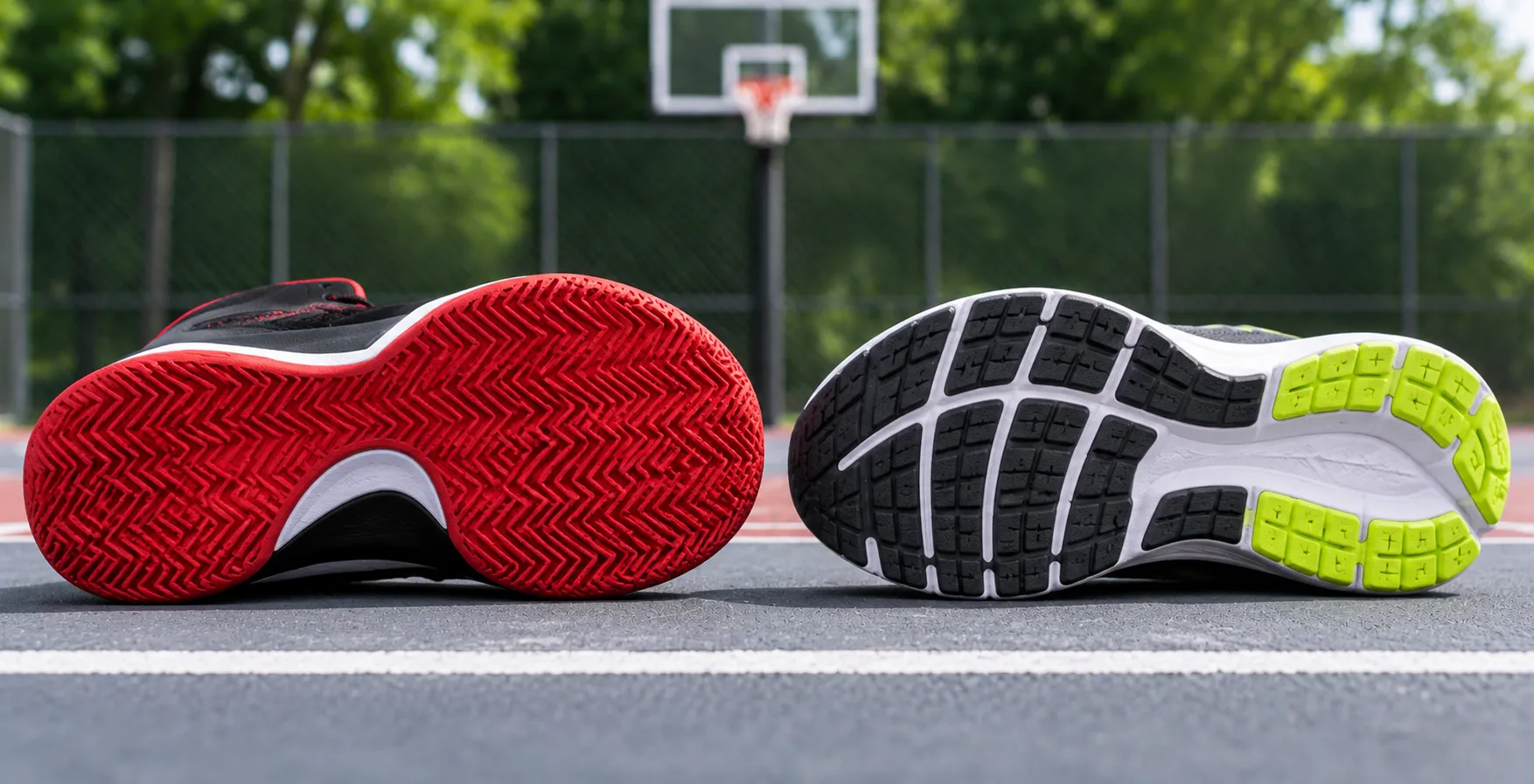
Good indoor basketball traction does not guarantee the same grip on wet pavement or loose gravel.
The playing surface also affects durability.
Under Armour’s outdoor basketball shoe guidance explains that asphalt and concrete can wear down shoes made for indoor gym floors more quickly.
If you regularly run outdoors in an indoor basketball shoe, the outsole may wear faster than it would during normal indoor use.
An outdoor basketball model may handle rough surfaces better.
Even so, outdoor durability does not automatically make it the right shoe for distance running.
When Can You Run in Basketball Shoes?
Basketball shoes can be suitable for some types of running.
The main considerations are distance, frequency, surface, fit, and the specific shoe.
There is no scientifically established distance at which basketball shoes suddenly become unsafe.
Instead, consider how different types of running place different demands on your footwear.
Short Runs and Casual Jogging
Occasional short runs are generally the most reasonable use outside basketball.
For example, you might jog to a nearby outdoor court or complete a short warm-up before practice.
If your basketball shoes fit properly, feel comfortable, and have suitable traction, they may work for these activities.
You do not necessarily need to carry another pair of shoes for every brief jog.
However, pay attention to the surface.
An indoor-only basketball shoe might not be ideal for running along rough pavement, especially if you want to preserve its court traction.
Comfort is another consideration.
A shoe that feels good during a few explosive movements may begin rubbing or feeling restrictive during continuous running.
If that happens, stop rather than forcing yourself to continue.
Short runs can be reasonable, but there is no universal safe distance for every basketball shoe or runner.
Basketball Sprints and Conditioning
Basketball shoes are designed to accommodate running as part of basketball.
That includes quick accelerations, defensive recovery runs, fast breaks, and repeated court-length sprints.
Basketball involves forward movement, backward movement, jumping, and lateral movement, often within a few seconds.
If your conditioning session involves suicides, shuttle runs, defensive slides, and other basketball drills on a suitable court, basketball shoes are generally the logical choice.
They provide the sport-specific traction and stability those drills require.
This is different from wearing the same shoes for repeated sprint sessions on a running track.
Track shoes and sprint-specific footwear may use different designs to suit those surfaces and movements.
Use the right shoe for the actual session rather than assuming all running activities are identical.
Treadmill Running
You can often use basketball shoes on a treadmill, provided they fit properly and are suitable for the equipment.
An occasional short treadmill jog may be comfortable in some models.
However, running on a treadmill still involves repeated forward strides.
The moving belt does not remove the importance of footwear fit, grip, and comfort.
If treadmill running becomes a regular part of your workouts, proper running shoes are generally the better option.
Before using basketball shoes on a treadmill, inspect the soles.
Remove stones, grit, or other debris that could affect the belt or your footing.
Check the gym’s footwear rules if necessary.
Do not assume that a treadmill makes every basketball shoe suitable for running longer distances.
Moderate Running and Regular Road Runs
Regular road running places repeated demands on your feet, shoes, and lower limbs.
Even a moderate running routine can involve substantial mileage over several weeks.
Basketball shoes may feel acceptable at first, but comfort during one short session does not guarantee they will suit repeated runs.
Some models may feel heavy or restrictive.
Others may provide enough comfort for occasional use but wear more quickly on asphalt.
If you plan to run several times a week, dedicated running shoes are a more sensible investment.
They are designed for the movement pattern and surface you will use most often.
You also avoid putting unnecessary outdoor mileage on basketball shoes you want to preserve for games.
Long-Distance Running and Marathon Training
Basketball shoes generally are not the best choice for long-distance running.
You might be physically capable of completing a 5K or longer run in them, but that does not make them ideal.
Running longer distances means repeating similar movements for an extended period.
Small differences in fit, weight, and how the shoe feels can become more noticeable as the run continues.
A basketball shoe that feels secure during a game may feel less comfortable after sustained forward running.
Regular road mileage can also wear down court-specific outsoles.
If you are training for your first half marathon or preparing for a marathon, choose running footwear suited to your training.
That does not mean a basketball shoe will automatically cause injury during a long run.
It means purpose-built running shoes make more practical sense for frequent distance running.
Pros and Cons of Running in Basketball Shoes
Basketball shoes offer some advantages for mixed activities, but they also involve trade-offs.
The benefits are strongest when running is only one part of a basketball workout.
Advantages
Convenience
One pair can cover shooting practice, court sprints, warm-ups, and short occasional runs.
This can be useful when you do not want to carry multiple pairs.
Court-specific stability
Basketball shoes provide stability for movements involving stops, cuts, and changes of direction.
That makes them suitable for conditioning sessions that include basketball drills.
Cushioning
Many modern basketball shoes include substantial cushioning.
However, the amount and type of cushioning differ between models, and cushioning alone does not determine running suitability.
Familiarity
If you regularly play basketball, you may already feel comfortable in your basketball shoes.
That familiarity can make them a practical option for brief activity.
However, comfort during basketball does not automatically mean the shoes will feel equally good during a long run.
Disadvantages
Possible extra weight
Some models contain additional materials for support and stability.
That extra weight may be less desirable during sustained running.
Different movement priorities
Basketball shoes are generally built around multidirectional movement rather than repeated forward strides.
Some models may therefore feel less natural during steady jogging.
Outdoor outsole wear
Running on concrete or asphalt may wear down indoor basketball shoe traction patterns.
This is particularly relevant if you want to keep the shoes for hardwood court use.
Possible comfort issues
A shoe might rub, feel restrictive, or allow unwanted heel movement during longer runs.
The response depends on the fit, model, and individual runner.
Cost of replacing shoes
Regular running adds wear.
If you use an expensive basketball pair for both frequent road runs and court play, you may eventually need to replace it sooner.
The tradeoff is not always worth it when a separate running pair would better serve your needs.
Can Running in Basketball Shoes Cause Injuries?
Running in basketball shoes does not automatically cause injuries.
However, wearing shoes that fit poorly or feel unsuitable for your activity can contribute to discomfort.
Common concerns include knee pain, shin splints, ankle problems, and foot pain.
What Does the Research Say?
A 2022 Cochrane systematic review examined whether different types of running shoes affected lower-limb running injuries.
The review included 12 trials involving 11,240 participants.
Researchers found that much of the evidence comparing different running-shoe categories was uncertain.
Importantly, the review did not identify trials directly comparing running shoes against non-running shoes.
That means the findings cannot tell us exactly how injury rates differ between basketball shoes and proper running shoes.
There is also no reliable universal figure showing that basketball shoes increase running injuries by a particular percentage.
This does not mean footwear is irrelevant.
It means the evidence is not strong enough to make categorical injury claims.
Shin Splints and Knee Pain
Shin splints and knee pain can occur during running for several reasons.
Training volume, previous injuries, changes in activity, running surfaces, and individual movement patterns may all matter.
Footwear comfort and fit are also relevant.
However, it would be misleading to claim that basketball shoes directly cause shin splints or knee problems.
The research reviewed for this article does not establish that relationship.
If you develop pain during running, assess the whole situation rather than immediately blaming one feature of your shoes.
For example, suddenly increasing the distance or frequency of your runs may be relevant.
The same applies if your shoes feel uncomfortable or no longer fit securely.
Ankle Support and Injury Prevention
Basketball players often choose shoes partly for ankle support.
Some prefer high-tops, while others feel more comfortable in low-top models.
However, a taller ankle collar does not guarantee protection against ankle sprains.
Likewise, a high-top basketball shoe is not automatically safer for running than a low-top shoe.
Running generally involves different movement demands from repeatedly cutting and landing during basketball.
The best practical approach is to choose footwear that fits well and suits the activity.
If you experience persistent pain, swelling, or localized discomfort, stop running and seek advice from a qualified healthcare professional.
Do not continue running through increasing pain because you assume your shoes must be safe.
Does Running Damage Basketball Shoes?
Running does not automatically damage basketball shoes.
They are made for athletic movement, and running is part of basketball.
However, running outside the shoes’ intended use can increase wear.
Outsole Wear and Court Performance
Indoor basketball shoes are often designed for clean gym floors.
Their outsole patterns are intended to provide grip during basketball movements.
Asphalt and concrete can be more abrasive.
Repeated outdoor running may gradually wear down the rubber or reduce the depth of the traction pattern.
This can matter when you return to an indoor basketball court.
A worn or dirty outsole may feel different from a clean, unworn one.
However, there is no established number of road miles that guarantees a specific loss of basketball performance.
One short jog will not necessarily ruin a pair of shoes.
The concern is accumulated wear, particularly when using indoor-only basketball footwear on rough surfaces.
Cushioning and General Wear
Running also adds repeated use to the midsole and upper.
Over time, athletic footwear can lose some of its original feel as materials wear.
However, the rate depends on the design, conditions, and how frequently you use the shoes.
Do not apply running-shoe replacement mileage directly to basketball shoes.
There is no reliable universal mileage limit for basketball footwear used for running.
Instead, inspect the shoes regularly.
Look for worn tread, damaged materials, loose sections, or changes in how securely they fit.
If you regularly play indoor basketball, keeping a dedicated court pair can help preserve it for that purpose.
Tips for Running in Basketball Shoes
If basketball shoes are your only available footwear, you do not necessarily need to avoid every short run.
Use them carefully and pay attention to how they feel.
1. Check the Fit Before Running
Your toes should have enough room to move.
The heel should feel secure without excessive slipping.
Do not assume that uncomfortable shoes will become suitable after a long break-in period.
2. Inspect the Soles
Check for worn traction, tears, loose materials, or objects stuck in the tread.
Avoid running in shoes that are clearly damaged.
3. Start With a Short, Easy Run
Do not begin with a long-distance session simply to test whether the shoes work.
Start modestly and see how they feel.
There is no universally approved safe running distance for basketball shoes.
4. Choose an Appropriate Surface
A flat, dry, predictable surface is easier to assess than wet pavement or loose gravel.
Check whether your specific basketball shoes are intended for indoor or outdoor use.
5. Pay Attention to Comfort
Notice rubbing, heel movement, pressure around the toes, or pain.
If the shoes feel unstable or uncomfortable, stop and reconsider your footwear.
Comfort is useful feedback, although it cannot guarantee injury prevention.
6. Avoid Unnecessary Road Mileage in Indoor Shoes
If you want to preserve your basketball shoes for hardwood courts, limit unnecessary outdoor use.
Regular road running may gradually wear down their traction.
7. Consider Separate Shoes if Running Becomes a Habit
If you start running several times per week, a comfortable pair of dedicated running shoes is generally a better long-term choice.
You do not need the most expensive model.
Focus on proper fit, intended use, and the surface where you usually run.
When Should You Choose Running Shoes Instead?
The right shoe depends on which activity you do most often.
If you mainly play basketball and occasionally complete short runs, basketball shoes may be enough.
If you mostly run, proper running shoes make more sense.
If you regularly do both, owning two separate pairs is worth considering.
For more basketball-specific gear, see our basketball training equipment guide.
For basketball, use footwear designed for court traction, jumping, landing, and quick directional changes.
For regular running, use footwear designed for the surface and type of running you do.
That might mean a daily road-running shoe, a trail-running shoe, or another specialized model.
Track shoes are not automatically the right choice for road running simply because they are made for runners.
Likewise, a basketball shoe is not automatically suitable for every running activity just because basketball players run during games.
Consider the actual activity rather than buying based on appearance, price, or brand alone.
For example, Nike and other major manufacturers make both basketball and running footwear.
A model’s intended purpose matters more than the logo.
The best choice is footwear that fits properly, feels comfortable, and is appropriate for your main activity.
Frequently Asked Questions
Can you run a mile in basketball shoes?
Yes, you may be able to run a mile in basketball shoes if they fit properly and feel comfortable.
A single mile is not automatically dangerous, but there is no scientifically established safe-distance limit that applies to everyone.
For regular running, dedicated running shoes are preferable.
Can you run a 5K in basketball shoes?
It is possible, but basketball shoes are generally not ideal for repeated 5K runs.
Running longer distances involves sustained forward movement, and dedicated running footwear is usually the more practical choice.
A 5K is not a proven injury threshold for basketball shoes.
Are basketball shoes good for sprinting?
Basketball shoes are suitable for the short accelerations and sprints involved in basketball.
For repeated track sprinting or specialized speed training, footwear designed for that activity and surface may be more appropriate.
The exact shoe and training conditions matter.
Can you wear basketball shoes on a treadmill?
Yes, basketball shoes can often be worn on a treadmill.
They should fit securely, provide suitable traction, and meet the facility’s rules.
For regular treadmill running, proper running shoes are generally preferable.
Are high-top basketball shoes better for running?
Not necessarily.
High-top shoes may feel more supportive around the ankle, but collar height alone does not determine running comfort or injury risk.
Cushioning, weight, fit, outsole design, and the individual’s needs also matter.
Can you use running shoes to play basketball?
You can perform some basketball activities in running shoes, but they are generally not ideal for full games.
Basketball involves lateral movement, sudden stops, and jumping.
Shoes designed for basketball usually provide more appropriate court-specific traction and containment for those demands.
Are basketball shoes good for walking?
Some basketball shoes can be comfortable for everyday walking.
However, weight, fit, cushioning, and personal comfort vary between models.
A shoe that works for short walks may not be the best choice for long walking days.
Will running outside ruin indoor basketball shoes?
Not necessarily.
One short outdoor run is unlikely to guarantee damage, but repeated use on rough pavement can increase outsole wear.
If maintaining indoor court traction is important, reserve your indoor basketball shoes mainly for gym floors.
Final Verdict: Are Basketball Shoes Good for Running?
Basketball shoes are good for running as part of basketball. They can also work for occasional short jogs when they fit comfortably and suit the surface.
However, they are generally less suitable for regular road running, long-distance training, and marathon preparation.
The main differences involve movement demands, shoe weight, traction, comfort, and durability.
There is no strong direct evidence proving that running in basketball shoes automatically causes injuries.
If basketball is your main sport, use basketball shoes. If running becomes a regular activity, choose proper running shoes.
One thought on “Are Basketball Shoes Good for Running? Pros, Cons & Risks”
Comments are closed.