Learning how to clean an indoor basketball safely helps protect its cover and grip. For ordinary dust and sweat, a soft cloth and a little water are often enough. Some can also be cleaned with diluted mild dish soap.
The safest method depends on the basketball’s material and the manufacturer’s instructions. A composite leather basketball, such as the Wilson Evolution, may have different cleaning requirements from a genuine leather basketball.
Here’s how to clean your basketball without unnecessarily damaging its grip or surface.
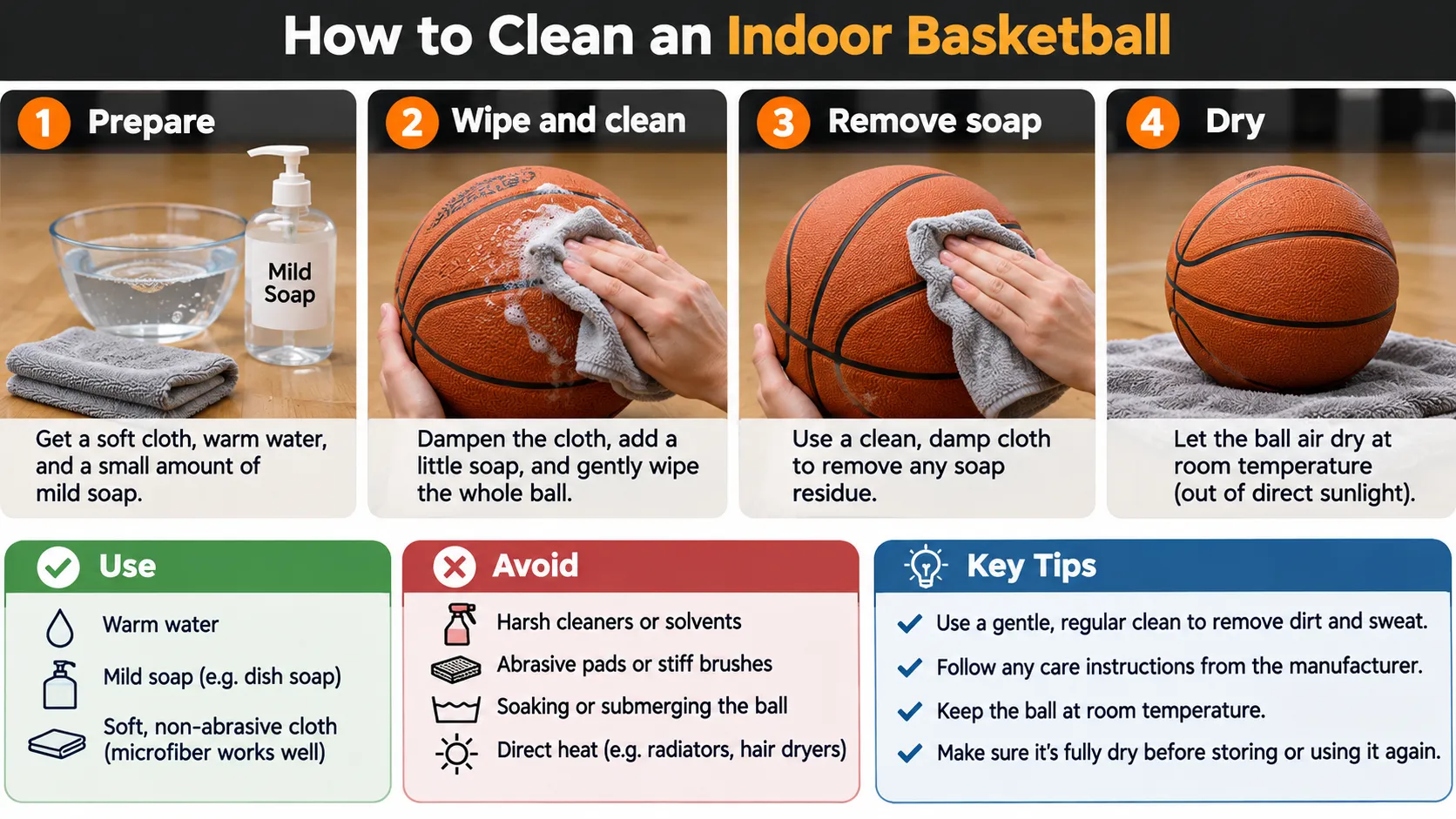
How to Clean an Indoor Basketball (Step by Step)
Start with the gentlest cleaning method. You don’t need strong chemicals or a stiff brush to remove ordinary dust from an indoor basketball.
What you’ll need:
- Two or three clean, soft cloths
- A small bowl of water
- Mild dish soap, if permitted for your basketball
- A clean, dry towel
1. Check Your Basketball’s Material
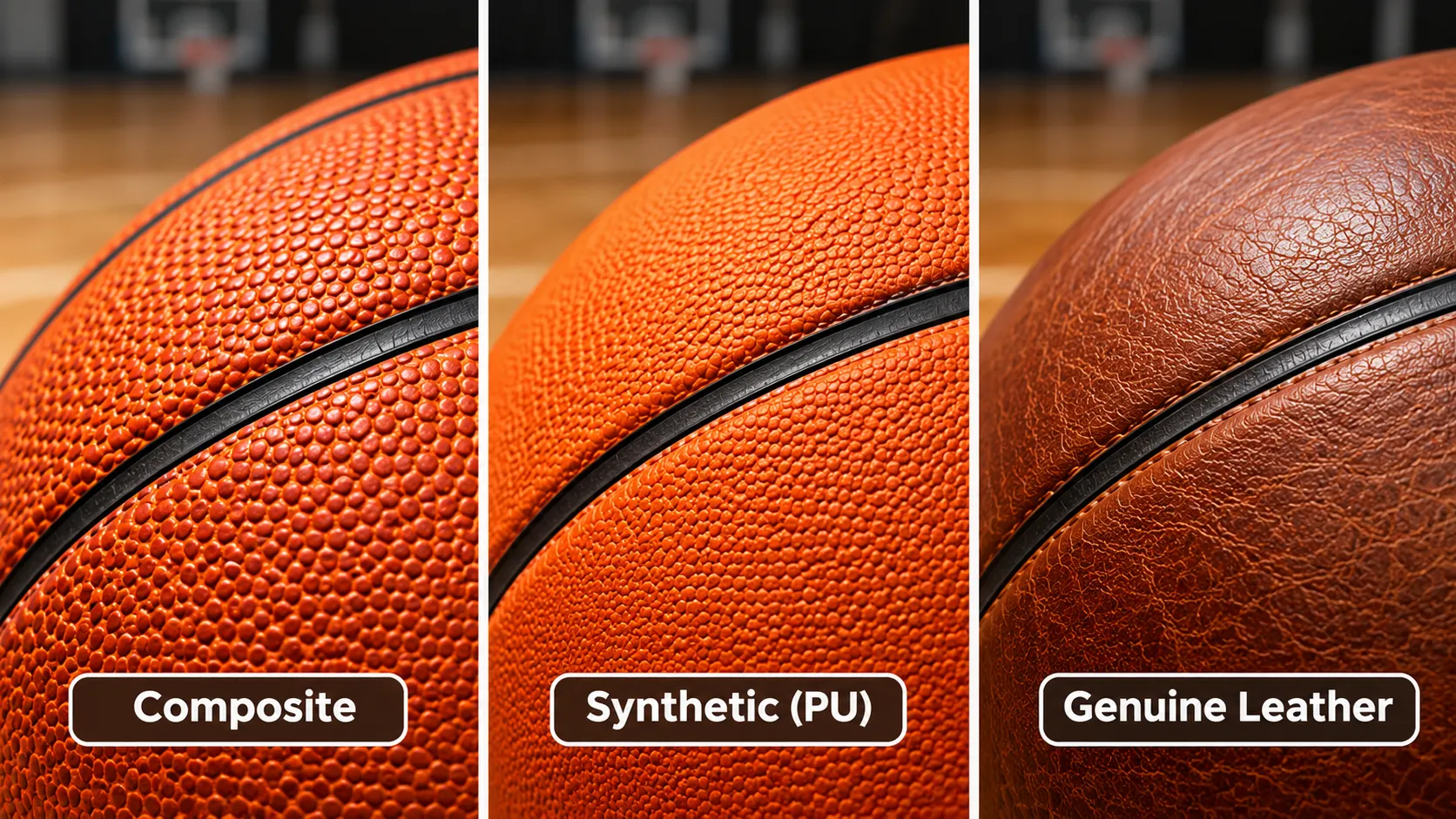
Before cleaning, check whether your basketball has a composite leather, synthetic leather, or genuine leather cover.
You can usually find this information on the manufacturer’s product page.
Don’t assume every indoor basketball is made from genuine leather. Many popular indoor basketballs use composite or synthetic materials.
If your basketball has special cleaning instructions, follow those first.
2. Remove Loose Dust and Dirt
Wipe the basketball with a clean, soft cloth.
Rotate the ball as you work so you can reach the entire surface, including the channels between its panels.
Start with a dry cloth. You may not need water if the basketball only has a light layer of dust.
Avoid scrubbing aggressively. Indoor basketball covers can have textured surfaces that you don’t want to wear down.
3. Wipe With a Slightly Damp Cloth
If dry wiping doesn’t remove the dirt, dampen a clean cloth with water.
Wring it out thoroughly so it’s moist rather than dripping.
Gently wipe the basketball’s surface. Pay attention to areas where dust, sweat, and grime have collected.
Don’t pour water directly onto the basketball or submerge it in a sink.
A damp cloth is enough for routine cleaning on many indoor basketballs, but check the instructions for your model.
4. Use Diluted Mild Soap if Needed
For basketball covers whose instructions permit soap, a diluted mild dish-soap solution can help remove dirt that water alone doesn’t lift.
Wilson’s published game-ball cleaning instructions provide a specific mixture:
1 tablespoon of mild dish soap in 1 gallon of warm water.
Dip a clean towel into the solution, wring it out, and gently wipe the entire ball for at least 30 seconds, as Wilson directs. This is not a proven disinfection time.
This is a diluted cleaning solution, not a reason to soak the basketball.
Only use soap when the manufacturer’s instructions permit it. Genuine leather basketballs may require different care.
5. Remove Any Soap Residue
If you used soap, take another clean cloth and dampen it with plain water.
Wring it out and wipe the basketball again.
The goal is to remove leftover soap without oversaturating the cover.
Don’t skip this step. Leftover detergent may cause discoloration.
6. Dry the Basketball Properly
Use a clean, dry towel to remove surface moisture.
Then leave the basketball in a shaded, well-ventilated place until it has dried.
Avoid direct sunlight, radiators, hair dryers, and other heat sources.
Wilson’s published soap-cleaning procedure specifies overnight airing. A quick damp wipe may require less time, but there isn’t one proven drying time for every basketball.
The main rule: Don’t put the basketball away while its cover is still damp.
Cleaning Different Indoor Basketball Materials
Not all indoor basketballs use the same cover.
| Basketball material | Recommended starting method | Main precaution |
|---|---|---|
| Composite leather | Soft cloth and a lightly damp wipe | Avoid harsh scrubbing and unapproved chemicals |
| Synthetic leather | Soft cloth and a lightly damp wipe | Check the model’s cleaning instructions |
| Genuine leather | Follow model-specific instructions | Don’t assume ordinary leather cleaners are safe |
Composite leather and synthetic leather are overlapping terms in basketball manufacturing. They shouldn’t automatically be treated as two completely different cleaning categories.
How to Clean a Composite or Synthetic Leather Basketball
Composite leather basketballs are common in indoor basketball.
The Wilson Evolution, for example, uses a composite cover rather than genuine leather.
For routine cleaning:
- Remove loose dust with a soft cloth.
- Use a lightly damp cloth for remaining dirt.
- If permitted, clean with diluted mild soap.
- Remove residue and dry the ball thoroughly.
Wilson’s game-ball cleaning guidance covers several composite basketball models, including the Evolution.
Avoid using abrasive sponges or strong cleaners simply because the ball feels dirty.
How to Clean a Genuine Leather Basketball
Genuine leather basketballs need more careful attention to their specific model instructions.
For example, Wilson’s official NBA game basketball uses genuine leather. The cover changes as players break it in, developing a darker appearance and a different feel.
That darkening doesn’t necessarily mean the basketball is dirty.
Don’t try to scrub away normal leather discoloration.
Some genuine leather basketballs allow wiping with a firmly wrung-out damp cloth. However, this doesn’t mean every leather basketball can be cleaned with soap or a general leather conditioner.
Check the manufacturer’s instructions before applying any cleaning product.
Special Care for the Molten BG5000
The Molten BG5000 is an important example of why model-specific instructions matter.
Molten’s Japanese product guidance allows cleaning with a dry cloth or a wet cloth that has been firmly wrung out.
However, Molten specifically warns against using its standard BC leather cleaner on the BG5000 because it may cause staining, discoloration, or color loss.
The manufacturer also provides instructions for using its designated natural-leather basketball wax, BC0010.
That doesn’t mean you should apply ordinary shoe polish, furniture wax, or household leather conditioner.
For a Molten BG5000, follow the manufacturer’s exact care instructions rather than generic leather-cleaning advice.
What Can You Use to Clean an Indoor Basketball?
Water and Mild Dish Soap
A soft cloth and a little water are suitable starting points for many basketballs.
For tougher dirt, diluted mild dish soap may be appropriate when the manufacturer permits it.
Wilson’s published instructions support a mild dish-soap solution for compatible game balls.
However, this doesn’t mean every brand of dish soap or every basketball cover has been tested.
For genuine leather, check the exact model instructions before using soap.
Can You Use Disinfecting Wipes?
Sometimes, but not on every basketball.
Wilson has published compatibility information for specific disinfecting products on certain composite basketballs, including the Evolution and Evo NXT.
Those findings don’t mean all disinfecting wipes are safe for all basketballs.
Different products may contain different chemicals.
Spalding’s cleaning guidance also warns against alcohol-based cleaners and bleach.
If you need to disinfect a basketball, check both the manufacturer’s compatibility instructions and the disinfectant label.
Cleaning a basketball and disinfecting it are not the same thing. A product that removes visible dirt doesn’t necessarily kill germs.
Cleaning Products to Avoid
Unless your basketball manufacturer specifically approves them, avoid:
- Rubbing alcohol and hand sanitizer
- Bleach and strong household cleaners
- Acetone and nail polish remover
- Magic Erasers and abrasive sponges
- Shoe polish and ordinary leather conditioners
- Vinegar or baking soda cleaning mixtures
- Stiff brushes on leather or composite covers
These products may damage the cover, alter its feel, or lack evidence of safe use on basketballs.
A soft cloth and an approved cleaning solution are better starting points.
How to Remove Common Basketball Dirt
Start with the basketball’s approved cleaning method and avoid trying increasingly harsh products.
Dust and Sweat
Indoor basketballs collect dust from the court and moisture from players’ hands.
Wipe the ball with a soft cloth after playing if it feels dusty or damp.
If necessary, use a lightly damp cloth.
For compatible covers, diluted mild soap can help with more persistent grime.
Stubborn Dirt and Stains
For dirt that won’t come off with a dry cloth, try the manufacturer’s approved damp-cloth method.
If soap is permitted, use a diluted solution and gentle wiping.
Avoid scrubbing harder simply because a stain remains.
Some marks may not be removable without damaging the basketball’s surface.
Why Is My Basketball Sticky?
A sticky basketball isn’t always dirty.
Some basketballs are designed with a tacky-feeling surface for handling.
However, abnormal stickiness can also develop as certain synthetic materials deteriorate.
If the cover is becoming sticky alongside cracking or peeling, cleaning may not solve the problem.
Don’t use alcohol or solvents to strip away the sticky layer without manufacturer approval.
Can Cleaning Restore Basketball Grip?
Cleaning can help when dirt and grime are making the basketball slippery.
Removing that buildup may make the original surface texture easier to feel.
However, cleaning can’t rebuild worn-out surface pebbles or repair a damaged cover.
If your basketball has lost grip because of heavy wear, washing it won’t necessarily restore its original performance.
Using the basketball on its intended playing surface also matters.
Our indoor vs outdoor basketball guide explains how different court surfaces affect basketball selection and durability.
How Often Should You Clean an Indoor Basketball?
You don’t need to wash your indoor basketball with soap after every practice.
Spalding Europe suggests wiping a basketball after practice and performing a deeper clean every few weeks. However, Spalding’s US guidance also warns that excessively frequent cleaning may damage the cover or markings.
A practical routine is:
- After playing: Check for dust, sweat, and visible dirt. Wipe the ball with a soft cloth when needed.
- When dirt builds up: Use a lightly damp cloth.
- For stubborn grime: Use diluted mild soap if your basketball’s manufacturer permits it.
- Before storing: Make sure the cover is dry.
There’s no need to follow a strict cleaning schedule if your basketball is already clean.
For shared basketballs used by schools, clubs, or teams, additional hygiene requirements may apply.
How to Dry and Store Your Basketball
Leaving moisture on the cover or storing a basketball in unsuitable conditions can cause problems over time.
Dry the Basketball Away From Heat
After cleaning, wipe the basketball with a dry towel.
Leave it somewhere with good airflow, away from direct sunlight.
Don’t use a hair dryer, radiator, or heater to speed up the process.
Spalding and Mikasa recommend natural drying rather than exposing sports balls to excessive heat.
If you followed Wilson’s diluted-soap cleaning procedure, its instructions specify leaving the basketball to air out overnight.
Store the Basketball Somewhere Cool and Dry
Once the basketball has dried, store it in a clean, dry location.
Avoid leaving it:
- In direct sunlight.
- Next to radiators or other heat sources.
- In a damp, poorly ventilated bag.
- Inside a hot car for extended periods.
Molten’s storage guidance warns against high temperatures and humidity.
If your basketball needs more air before your next session, check the recommended pressure printed on the ball.
You can also read our guide to deflating a basketball safely if you need to release excess air.
Common Basketball Cleaning Mistakes
Avoid these mistakes when cleaning an indoor basketball.
1. Soaking the basketball
Don’t submerge the basketball in a sink or bucket.
Excess moisture can damage the cover or seams. Use a damp cloth instead.
2. Using harsh chemicals
Bleach, alcohol-based cleaners, and strong household chemicals aren’t suitable general cleaning recommendations.
Spalding warns that some of these products can damage the cover and markings.
3. Scrubbing too hard
Abrasive materials can wear down the surface.
Use gentle pressure, especially on composite leather and genuine leather basketballs.
4. Applying the wrong leather cleaner
Don’t assume a product is suitable simply because its label says it’s made for leather.
Molten’s BG5000 is a clear example of a basketball with specific cleaning-product restrictions.
5. Leaving soap on the basketball
If you’ve used diluted soap, remove the residue with a clean, lightly damp cloth.
Wilson’s cleaning procedure includes this step before drying.
6. Drying the basketball with heat
Don’t place the basketball beside a radiator or use a hair dryer.
Dry it naturally in a shaded, ventilated location.
7. Cleaning normal leather discoloration aggressively
Genuine leather basketballs can darken during their normal break-in period.
Don’t assume that a darker basketball needs stronger cleaning.
8. Using an indoor basketball on rough outdoor courts
Even a perfectly cleaned indoor basketball can wear prematurely if used on unsuitable surfaces.
Follow the manufacturer’s intended-use designation rather than assuming every basketball can handle concrete or asphalt.
Frequently Asked Questions
Can You Wash an Indoor Basketball With Water?
Yes, many indoor basketballs can be cleaned with a lightly damp cloth.
However, washing doesn’t mean soaking the ball or holding it under running water.
Some genuine leather basketballs have specific restrictions. Always check the manufacturer’s instructions before cleaning.
Can You Use Dawn Dish Soap to Clean a Basketball?
A mild dish soap may be suitable for certain basketballs, but the exact formulation matters.
Wilson’s published game-ball cleaning procedure uses one tablespoon of mild dish soap in one gallon of warm water. It doesn’t establish that every Dawn product is approved for every basketball.
Check your basketball’s cleaning instructions before using soap.
How Do You Clean a Wilson Evolution Basketball?
The Wilson Evolution has a composite leather cover.
Start by removing loose dust with a soft cloth.
For more thorough cleaning, Wilson’s published game-ball instructions provide a diluted mild dish-soap procedure covering the Evolution.
Wipe gently with a wrung-out towel, remove any soap residue with a clean-water wipe, towel-dry, and allow the basketball to air out overnight.
Can You Use Clorox Wipes on a Basketball?
Only when the specific wipe is compatible with your basketball.
Wilson’s published guidance identifies Clorox Disinfecting Wipes with EPA registration number 5813-79 among products tested on certain composite basketballs.
That doesn’t establish long-term compatibility or approval for every Clorox product or basketball.
Don’t use disinfecting wipes on genuine leather basketballs without specific manufacturer approval.
Does Cleaning Restore Basketball Grip?
Cleaning can remove dirt and grime that make a basketball slippery.
However, it can’t restore worn-out surface texture or repair a deteriorating cover.
If your basketball is losing grip because of physical wear, cleaning alone may not solve the problem.
Why Is My Basketball Still Sticky After Cleaning?
Some basketballs naturally have a tacky surface.
However, persistent abnormal stickiness, particularly alongside cracking or peeling, can indicate deterioration of certain synthetic materials.
If approved cleaning doesn’t help, avoid applying stronger chemicals without checking the manufacturer’s instructions.
Can You Clean a Genuine Leather Basketball With Soap?
Not necessarily.
Some genuine leather basketballs have special cleaning requirements that differ from composite leather models.
For example, Molten’s BG5000 instructions permit a dry or firmly wrung-out damp cloth but warn against its standard BC leather cleaner.
Follow the instructions for your exact model rather than applying a general soap-cleaning method.
How Long Does an Indoor Basketball Take to Dry?
It depends on the cover material and how much moisture was used.
Wilson specifies overnight airing after its published soap-cleaning procedure.
For a quick damp wipe, the reviewed manufacturer guidance doesn’t establish one universal drying time.
Wait until the cover has dried before using or storing the basketball.
Final Takeaway
The safest way to clean an indoor basketball is to start with a soft cloth and use as little moisture as necessary.
For compatible composite and synthetic leather covers, a lightly damp cloth and diluted mild soap can remove dirt and grime. Genuine leather basketballs require closer attention to model-specific instructions.
Avoid harsh chemicals, soaking, abrasive scrubbing, and heated drying.
Gentle, model-appropriate care helps keep the cover clean without exposing it to unnecessary wear.
2 thoughts on “How to Clean an Indoor Basketball Safely”
Comments are closed.