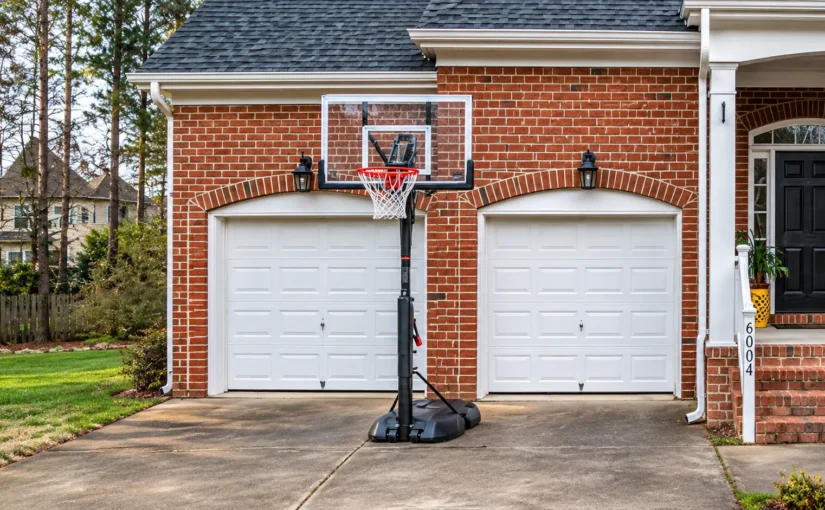
The best basketball hoop depends on your budget, playing space, and whether you want a portable or permanent setup.
For affordable driveway play, the Lifetime 1269 is a practical starting point. The Silverback SB60 offers a tempered-glass backboard for homeowners ready to install a permanent hoop. For a premium home court, the Mega Slam 72 offers a larger backboard and a wider height-adjustment range.
But no single basketball hoop is the right choice for every home.
This guide compares portable, in-ground, wall-mounted, and fixed-height basketball goals. We reviewed manufacturer specifications, US product listings, safety information, and independent testing where available.
BasketballRex has not personally tested these hoops. The recommendations reflect documented features and intended use, not invented testing scores or durability rankings.
Best Basketball Hoops at a Glance
| Best for | Basketball hoop | Approx. hardware price |
|---|---|---|
| Budget portable | Lifetime 1269 | $230 |
| Midrange portable | Silverback NXT 54 (B7401W) | $600 |
| Budget in-ground | Lifetime 71281 | $440 |
| Value glass in-ground | Silverback SB60 | $1,100 |
| Family height adjustment | Goalsetter All-American | From around $2,600, depending on configuration |
| Premium adjustable home court | Mega Slam 72 | $2,799 promotional price |
| Wall-mounted | Silverback NXT 54 Wall Mount | $440 |
Prices are US research observations from November 6, 2026. They may change, especially during promotions. Taxes, shipping, installation, concrete, and other materials can add to the total cost.
Best Budget Basketball Hoop: Lifetime 1269
The Lifetime 1269 is a sensible starting point for families who want an affordable basketball hoop without permanent installation.
It has a 44-inch polycarbonate backboard, an 18-inch solid-steel rim, a 27-gallon portable base, and a three-piece steel pole.
The rim adjusts from 7.5 to 10 feet in six-inch increments, allowing players to change the height for casual games and shooting practice.
At approximately $230, it is one of the least expensive full-size-rim systems in this comparison.
The compromise is its basic construction. Its smaller backboard provides less room for bank shots than larger models, and its standard rim does not have a spring-action breakaway mechanism.
It also needs to be assembled and filled with the approved ballast before use.
Best for: Beginners, families, and casual driveway basketball.
Skip it if: You want a larger backboard, a breakaway rim, or a more substantial permanent setup.
Best Midrange Portable Basketball Hoop: Silverback NXT 54
The Silverback NXT 54 Portable is a more substantial alternative to a basic budget basketball hoop.
The B7401W listing describes a 54-inch polycarbonate backboard with folded edges, a steel support structure, and an adjustable actuator that changes the rim height from 7.5 to 10 feet.
It also uses a wheelbarrow-style transport design. The hoop can be tilted onto its wheels for repositioning, although moving a filled portable basketball hoop still requires care and effort.
Independent testing of a Silverback NXT sample reported positive impressions of stability and rebound. However, the exact tested version could not be matched confidently to every current listing.
Check the model number before ordering. The B8401W and B7401W versions share the NXT name but describe different height-adjustment mechanisms.
At around $600, this is a considerable step up from the Lifetime 1269.
Best for: Families who want a larger portable hoop without installing concrete.
Skip it if: You need a lightweight hoop that can be moved frequently or want tempered glass.
Best Budget In-Ground Basketball Hoop: Lifetime 71281
The Lifetime 71281 is worth considering if you want a permanent basketball hoop but cannot justify the price of premium glass systems.
It features a 52-inch polycarbonate backboard, an 18-inch Slam-It spring-action rim, and a Power Lift adjustment mechanism.
The rim adjusts continuously from 7.5 to 10 feet.
Its three-piece steel pole is an important difference from more expensive in-ground hoops that use one-piece poles and heavier support structures.
At approximately $440 for the hardware, the 71281 offers an affordable entry into permanent basketball goal installation.
However, the price does not include the foundation. You still need to account for excavation, concrete, curing time, and final assembly.
Use the installation instructions for the exact model rather than applying foundation measurements from another basketball hoop.
Best for: Homeowners who want an adjustable in-ground basketball hoop on a tighter budget.
Skip it if: You want a tempered-glass backboard or a premium one-piece support structure.
Best Value Glass In-Ground Basketball Hoop: Silverback SB60
The Silverback SB60 is one of the strongest value options for buyers who want a permanent tempered-glass basketball hoop.
It features a 60 × 33-inch backboard with 5/16-inch tempered glass, a 4 × 4-inch steel pole, and a breakaway rim.
The height adjusts from 7.5 to 10 feet using an all-steel actuator. The system also provides approximately 2.5 feet of overhang and includes pole and backboard padding.
Its anchor-mounted design allows the goal to be unbolted, but moving it to another property still requires a suitable new foundation.
At around $1,100 before installation, the SB60 sits between budget polycarbonate hoops and much more expensive premium glass systems.
There is one warranty detail to check. The current product page advertises a five-year limited warranty, while an older manufacturer-authored manual lists seven years. Confirm the coverage that applies to your purchase.
Best for: Homeowners seeking a permanent glass basketball hoop without spending several thousand dollars on hardware.
Skip it if: You cannot install a concrete foundation or need a hoop that can move around the driveway.
Best Basketball Hoop for Family Height Adjustment: Goalsetter All-American
The Goalsetter All-American offers an important advantage for families with children of different ages: its rim adjusts from 6 to 10 feet.
Many other full-size systems in this comparison only lower to 7.5 feet.
The All-American uses a 60 × 38-inch backboard, a one-piece steel pole, and an internal height-adjustment mechanism.
It also offers different backboard materials and rim configurations, including acrylic or tempered glass.
That flexibility can help buyers choose a system for their household, but it makes price comparisons more complicated.
Before ordering, confirm the exact backboard material, rim, model configuration, and included accessories. Do not assume the advertised starting price covers every option.
A lower rim can be useful for developing players, but it does not replace supervision or proper installation.
Best for: Families wanting one permanent hoop that can accommodate younger children, teenagers, and adults.
Skip it if: You only need a basic outdoor hoop for occasional games.
Best Premium Adjustable Basketball Hoop: Mega Slam 72
The Mega Slam 72 is designed for homeowners building a dedicated outdoor basketball setup.
It has a 72-inch-wide tempered-glass backboard with half-inch glass, an 8 × 6-inch steel pole, and a substantial support structure.
Its published product information describes height adjustment from 5 to 10 feet, with lift-assist components to help raise and lower the goal.
It also includes an anchor system, padding, and a standard Collegiate Flex breakaway rim. A different 180-degree rim is available as an upgrade.
These are useful specifications for a premium home court. However, the research did not find controlled testing proving the Mega Slam 72 has the best rebound, lowest vibration, or longest service life of every basketball hoop.
The researched promotional price was approximately $2,799, with a higher regular price. Check the current offer before using that figure in your budget.
Also review the warranty carefully. Limited lifetime structural coverage does not mean every component, including glass and padding, is covered for life.
Best for: Homeowners committed to a premium adjustable basketball hoop for regular outdoor play.
Skip it if: Your space is limited, you cannot install a substantial foundation, or a smaller hoop already meets your needs.
Best Wall-Mounted Basketball Hoop: Silverback NXT 54 Wall Mount
The Silverback NXT 54 Wall Mount provides a full-size-rim option without a portable base or freestanding in-ground pole.
It features a 54 × 33-inch polycarbonate backboard, a breakaway rim, and height adjustment from 7.5 to 10 feet.
The manufacturer lists approximately 2.5 feet of overhang.
At around $440 for the system, it can appear inexpensive compared with premium in-ground basketball goals.
However, installation depends on the supporting structure. The manufacturer excludes wall-mounting fasteners and warns against attaching the system to brick surfaces or facades.
Do not assume a garage wall or exterior wall can safely support the hoop without checking its construction and the manufacturer’s requirements.
Best for: Homes with a suitable structural wall and limited ground space.
Skip it if: You cannot confirm the wall is suitable or need a hoop that can be repositioned.
Other Basketball Hoops Worth Considering
Four additional models may suit more specific needs. They are alternatives rather than separate overall winners.
Spalding Momentous 54: Acrylic Portable With Easier Assembly
The Spalding Momentous 54 offers an acrylic backboard, a crank-adjustable rim, and a 36-gallon base. Independent testing reported assembly taking approximately 30 minutes for the tested sample.
Important recall warning: Certain older Spalding Momentous EZ portable systems were recalled in September 2022 because a support-arm weld could fail and allow the backboard to fall.
Check the product identifiers and the official CPSC recall notice. If a unit is affected, stop using it and follow the manufacturer’s repair instructions. Do not assume that every Momentous unit is affected or that an individual unit is exempt without checking.
Spalding Beast 60: Premium Glass Without Excavation
The Spalding Beast 60 combines a 60-inch tempered-glass backboard, breakaway rim, and 55-gallon portable base. It adjusts from 7.5 to 10 feet and uses four wheels for movement.
At roughly $2,300 in the research, it is a specialist choice for buyers who want glass without a permanent foundation. Compare that expense with a fully installed in-ground system before deciding.
Goalrilla FT60: Premium 60-Inch In-Ground Alternative
The Goalrilla FT60 features a 60 × 38-inch backboard with 3/8-inch tempered glass, a breakaway rim, and a one-piece support pole.
It offers up to 3.5 feet of overhang and adjusts from 7.5 to 10 feet. Prices around $2,350–$2,650 appeared in the research, depending on the offer.
Its published pole dimensions are inconsistent, so confirm the exact specification with Goalrilla before ordering.
Mega Slam FX 72: Fixed-Height Home Court
The Mega Slam FX 72 is designed for players who always use a 10-foot rim.
It features a 72-inch-wide, half-inch tempered-glass backboard, a large steel pole, and a breakaway rim.
Unlike the adjustable Mega Slam 72, the FX 72 stays at regulation height. It makes more sense for a dedicated adult home court than for families wanting to lower the basket for children.
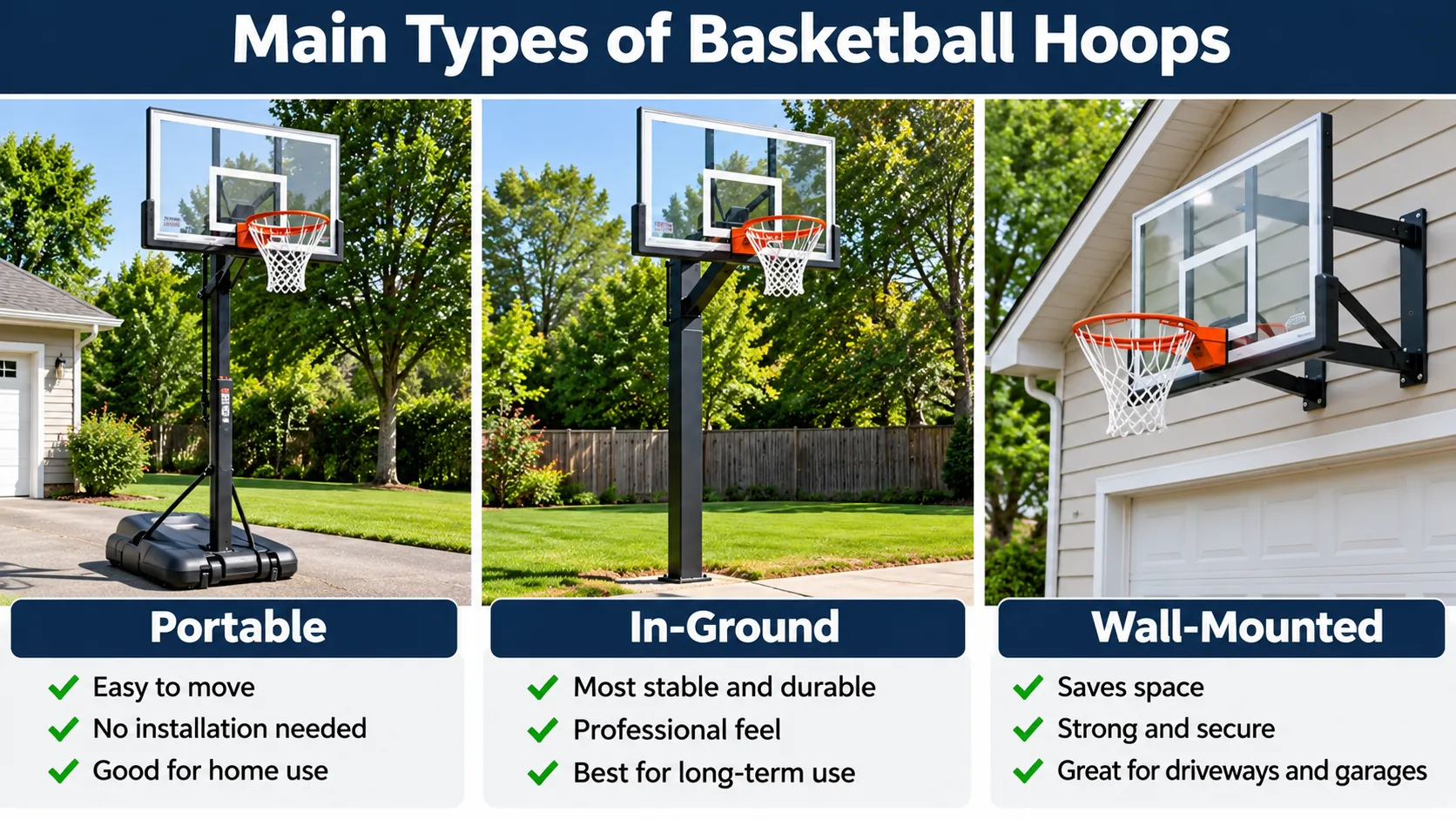
Portable vs. In-Ground vs. Wall-Mounted Basketball Hoops
Choose the type of basketball hoop before comparing premium features.
| Type | Main advantage | Main drawback |
|---|---|---|
| Portable | Does not require a permanent concrete foundation | Base occupies space and can be difficult to move once filled |
| In-ground | Creates a permanent home basketball setup | Requires suitable ground conditions, excavation, and installation |
| Wall-mounted | Preserves ground-level space | Depends on the supporting wall and correct structural attachment |
When to Choose a Portable Basketball Hoop
A portable basketball hoop makes sense when you cannot make permanent changes to the property or may need to reposition the goal.
However, a base filled with water or sand can be heavy. Wheels do not mean every model is easy to move, especially across rough ground.
For outdoor driveway play, measure where the base will sit and check whether it interferes with vehicles, doors, or nearby obstacles.
For more options, see our guide to the best portable basketball hoops.
When to Choose an In-Ground Basketball Hoop
An in-ground basketball hoop makes sense for a homeowner planning a permanent playing area. For specific recommendations, see our best in-ground basketball hoops guide.
The foundation, pole, joints, support arms, and backboard all affect the system’s behavior. Permanent installation does not guarantee a completely motionless hoop.
Check the exact installation requirements before buying. Foundation dimensions and concrete curing times are not universal across manufacturers.
When to Choose a Wall-Mounted Basketball Hoop
Wall-mounted systems are useful when an appropriate building structure is available and you want to keep the ground clear.
They still need correct placement and secure structural attachment. A wall-mounted hoop is not automatically suitable for every garage, house, or workshop.
What to Look for When Buying a Basketball Hoop
Backboard Size
A larger backboard gives you a wider surface for bank shots.
Budget home basketball hoops often have backboards around 44–54 inches wide. Larger residential models commonly use 60- or 72-inch backboards.
However, the widest board is not always the best purchase. Consider the available playing area, nearby structures, pole placement, and your budget.
A 72-inch system may be unnecessary for casual driveway shooting.
Backboard Material
There are three common backboard materials:
- Polycarbonate: Impact-resistant and common on budget and midrange home hoops.
- Acrylic: A clear alternative used on some portable and permanent systems.
- Tempered glass: Common on premium basketball hoops and competition-oriented equipment.
Material alone does not determine how the basketball rebounds. Backboard thickness, framing, support arms, and mounting construction also matter.
For a closer look at the equipment, read our parts of a basketball hoop guide.
Height Adjustment
Most full-size basketball hoops reach a standard rim height of 10 feet, but their minimum settings differ.
Some models lower to 7.5 feet. The Goalsetter All-American reaches 6 feet, while the Mega Slam 72 is advertised with a lower adjustment range.
Also consider the mechanism. Budget hoops may require manual changes, while others use a crank or lift-assist system.
For age-specific guidance, see our basketball hoop height guide.
Rim Type and Dunking
A breakaway rim can move under certain loads, but that does not automatically make an entire basketball hoop safe for dunking or hanging.
The pole, backboard supports, anchors, and manufacturer’s instructions all matter.
Never assume a portable hoop is safe to hang from just because it has a spring-loaded rim.
Stability and Durability
For a portable basketball hoop, check the base, ballast requirements, pole construction, and approved playing surface.
For an in-ground system, check the foundation requirements, steel structure, joints, and support arms.
No controlled test in the available research established a complete stability or long-term durability ranking across these 11 hoops.
Look for documented construction details rather than unsupported claims such as “zero vibration” or “storm-proof.”
Warranty and Replacement Parts
A longer warranty sounds attractive, but the details matter more than the headline.
Some limited lifetime warranties cover structural parts while excluding glass, nets, padding, rust, labor, or installation.
Check the applicable terms, the manufacturer’s replacement-part support, and what happens if a major component needs repair.
How Much Does a Basketball Hoop Cost?
The researched hardware prices range from roughly $230 for a basic portable hoop to several thousand dollars for premium permanent systems.
But the price of the basketball hoop is not always the final cost.
A portable model may require suitable ballast and assembly. An in-ground model can require excavation, concrete, curing time, and professional installation.
Goalrilla publishes a professional installation guideline of approximately $400–$600. That is a manufacturer estimate, not a guaranteed nationwide quote.
For example, combining an approximately $1,100 Silverback SB60 with that installation benchmark gives an illustrative total of about $1,500–$1,700 before taxes and any additional unquoted costs.
Ask installers whether their quote includes concrete, materials, foundation work, assembly, and site cleanup.
If you are planning a larger playing area, our basketball court installation guide explains the wider construction process.
Common Basketball Hoop Buying Mistakes
The biggest mistake is buying a basketball hoop before checking whether it fits your property.
Before ordering:
- Measure the playing area and check the available overhang.
- Make sure a portable base will not block vehicle access.
- Check whether the ground is level and suitable for the selected model.
- Confirm the total installation cost, not just the hardware price.
- Read the manufacturer’s dunking, hanging, and weather instructions.
- Check the exact model number and current warranty.
- Review recall information when purchasing a used basketball hoop.
For in-ground installation in the United States, contact 811 before digging so underground utilities can be identified. Follow local requirements and the exact manufacturer’s installation instructions.
Frequently Asked Questions
What Is the Best Basketball Hoop for Home Use?
The best choice depends on your space and budget. The Lifetime 1269 is a practical budget portable option, while the Silverback SB60 is a strong candidate for homeowners wanting a permanent tempered-glass setup.
Is a Portable or In-Ground Basketball Hoop Better?
Portable basketball hoops are useful when permanent installation is unsuitable. In-ground hoops make more sense for a dedicated home playing area. Neither type guarantees better performance without considering the exact model and installation.
Is a 54-Inch or 60-Inch Backboard Better?
A 60-inch backboard provides a wider target for bank shots, but a 54-inch model may be enough for casual home play. Support construction and available space matter alongside width.
What Is the Best Basketball Hoop for Kids?
Look for an adjustable basketball hoop that can reach an appropriate height for the child’s age and ability. Check its minimum setting, safety requirements, and whether an adult should operate the adjustment mechanism.
Are Expensive Basketball Hoops Worth It?
They can be worthwhile if you want a larger glass backboard, heavier support construction, or a dedicated permanent court. However, a higher price does not automatically mean better shooting performance or longer durability.
How Long Does an In-Ground Basketball Hoop Take to Install?
Installation depends on the model, ground conditions, weather, and contractor. Excavation, concrete curing, and final assembly may take several days. Follow the model-specific manual rather than assuming every system uses the same schedule.
Final Verdict
The best basketball hoop is the one that fits where and how you play.
For affordable driveway basketball, the Lifetime 1269 is a sensible budget starting point.
For a permanent tempered-glass system at a more moderate hardware price, consider the Silverback SB60.
For families wanting a lower adjustable rim, the Goalsetter All-American offers a useful 6–10-foot range.
And for a premium adjustable home court, the Mega Slam 72 offers a substantial equipment package, provided you have the space and installation budget.
Choose your hoop type first. Then compare backboard size, material, adjustment, installation needs, safety limits, and total ownership cost.
5 thoughts on “Best Basketball Hoop | Top Picks for Every Home and Budget”
Comments are closed.