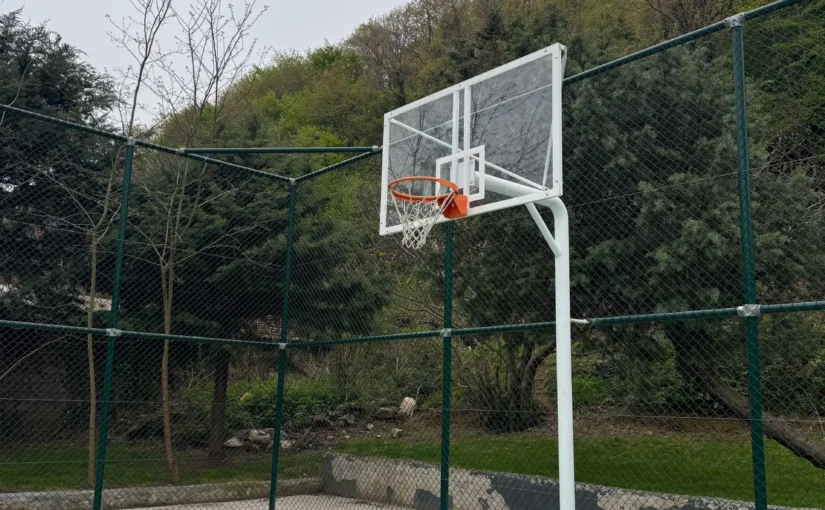
The Silverback SB60 is our best overall in-ground basketball hoop for homeowners who want a 60-inch tempered glass backboard without spending over $2,000.
For a smaller budget, the Lifetime 71525 offers an adjustable 54-inch backboard. If you want a regulation-width backboard and heavier construction, the Goalrilla FT72 and Mega Slam 72 are worth considering.
The best choice depends on your budget, driveway size, backboard material, and how seriously you play.
This guide compares nine in-ground basketball hoops using manufacturer specifications, installation manuals, and published prices. These are research-based recommendations, not products we’ve personally tested.
Prices are in US dollars and were researched November 6–7, 2026. Confirm current prices, availability, and included accessories before buying.
Best In-Ground Basketball Hoops at a Glance
| Basketball hoop | Backboard | Observed price | Best for |
|---|---|---|---|
| Silverback SB60 | 60″ glass | $1,099.95 | Overall value |
| Lifetime 71525 | 54″ polycarbonate | $469.99 | Tight budgets |
| Silverback NXT 54 | 54″ polycarbonate | $569.95 | Affordable direct burial |
| Silverback SB54 | 54″ glass | $969.95 | Smaller driveways |
| Goalrilla GS60C | 60″ glass | $2,049.95 | Stronger construction |
| Goalrilla FT72 | 72″ glass | $2,949.95 | Serious players |
| Goalsetter All-American 60 | 60″ glass | $2,599.99 | Family use |
| Mega Slam 72 | 72″ glass | $2,799 | Premium home courts |
| Pro Dunk THOR Gold | 60″ glass | $2,399 | Heavy-duty 60″ setup |
These prices exclude installation, tax, and any additional delivery charges.
The 9 Best In-Ground Basketball Hoops
1. Silverback SB60 — Best Overall Value
Model B5402W · Observed price: $1,099.95
The Silverback SB60 offers a useful balance between price, backboard size, and permanent installation.
It has a 60 × 33-inch tempered glass backboard, a 4 × 4-inch two-piece steel pole, and 2.5 feet of published overhang.
The glass measures 5/16 inch thick. Although thinner than the glass used on several premium systems, it gives buyers a glass playing surface without requiring a premium budget.
Its crank adjustment allows the rim to move between 7.5 and 10 feet.
The SB60 also includes backboard and pole padding, which can cost extra on other basketball goals.
Advantages: Large glass backboard, included padding, anchor-mounted construction, and a lower price than premium systems.
Limitations: Sectional pole, thinner glass than higher-end models, and a 7.5-foot minimum rim height.
The manufacturer’s current product information lists a five-year limited warranty, while some older documentation states seven years. Confirm the applicable warranty before purchasing.
Best for: Families and recreational players who want a permanent glass-backboard hoop at a reasonable price.
2. Lifetime 71525 — Best Budget Option
Model 71525 · Observed retail price: $469.99
The Lifetime 71525 is an affordable option for homeowners who want to move beyond a portable basketball hoop.
Its 54-inch steel-framed polycarbonate backboard is designed for recreational use.
Polycarbonate is impact-resistant and generally lighter than tempered glass. However, it doesn’t provide the same rebound characteristics as a rigid, premium glass system.
The Power Lift adjustment mechanism lets players change the rim height between 7.5 and 10 feet.
It also includes a Slam-It Pro rim with a spring mechanism.
Advantages: Affordable price, adjustable height, impact-resistant backboard, and an established manufacturer.
Limitations: Smaller plastic backboard, less premium construction, and limited verified information about some structural specifications.
The exact foundation and assembly requirements should be checked against the manual supplied with the product.
Best for: Casual driveway basketball and families working with a limited budget.
3. Silverback NXT 54 — Best Affordable Direct-Burial Hoop
Model B8402W · Observed price: $569.95
The Silverback NXT 54 provides a step up from basic recreational equipment without reaching glass-backboard prices.
It features a 54 × 33-inch polycarbonate backboard, a 3.5-inch round sectional steel pole, and 2 feet of overhang.
Its height adjusts from 7.5 to 10 feet using a steel crank.
The main difference is installation.
Unlike anchor-mounted basketball hoops, the NXT uses a direct-burial design. Its lower pole section is installed in concrete.
This can make future removal or relocation more difficult.
Advantages: Affordable price, adjustable height, useful overhang, and a five-year limited warranty.
Limitations: Polycarbonate rather than glass, sectional pole, and permanent direct-burial installation.
The manufacturer’s documentation identifies polycarbonate as the backboard material, although some retailer descriptions have differed.
Best for: Homeowners who want an affordable in-ground hoop and don’t expect to relocate it.
4. Silverback SB54 — Best Compact Glass Backboard
Model B5401W · Observed price: $969.95
The Silverback SB54 is worth considering when a 60-inch backboard would be unnecessarily large.
It uses a 54 × 33-inch tempered glass backboard measuring 5/16 inch thick.
The supporting structure includes a 4 × 4-inch two-piece steel pole and 2 feet of overhang.
Its crank adjustment covers 7.5 to 10 feet.
Unlike the NXT, the SB54 uses an anchor-mounted installation. This allows the upper system to be removed from its foundation, although relocating it still requires substantial work.
Advantages: Glass backboard, compact dimensions, anchor-mounted design, and included backboard padding.
Limitations: Smaller playing surface than the SB60 and a sectional support pole.
At the observed prices, the SB60 costs approximately $130 more. That makes the larger model worth comparing if your space allows it.
Best for: Smaller driveways where glass rebound matters more than maximum backboard width.
5. Goalrilla GS60C — Best Mid-Premium Upgrade
Model B5002W-1 · Observed price: $2,049.95
The Goalrilla GS60C offers heavier construction than the Silverback systems.
It has a 60 × 36-inch tempered glass backboard measuring 3/8 inch thick.
The system also uses a one-piece steel pole, rather than a sectional pole, and provides up to 2.5 feet of overhang.
A one-piece support removes the joints found in multi-section poles. However, this doesn’t prove a particular amount of improvement in stability.
The manufacturer’s published pole dimensions have conflicted between 5 × 5 inches and 5.5 × 5.5 inches. Confirm the exact specification before buying.
Advantages: Thicker glass, one-piece pole, adjustable height, and limited lifetime warranty.
Limitations: Considerably more expensive than the SB60, with unresolved pole-dimension information.
Best for: Regular players who want a stronger supporting structure without purchasing a full 72-inch system.
6. Goalrilla FT72 — Best for Serious Players
Model B3017W-1 · Current manufacturer listing: $2,949.95
The Goalrilla FT72 is designed for players who want a regulation-width backboard at home.
Its 72 × 42-inch tempered glass backboard matches the NBA’s standard backboard dimensions.
The glass measures 3/8 inch thick.
The supporting structure uses a 6 × 6-inch one-piece steel pole, dual extension arms, and reinforced connections.
Goalrilla describes this arrangement as its Three-Point Technology.
The rim adjusts between 7.5 and 10 feet, and the manufacturer publishes a maximum overhang of 4 feet. The actual distance depends on the selected height.
Advantages: Regulation-width backboard, one-piece pole, substantial overhang, and limited lifetime warranty.
Limitations: High price, demanding installation, and a minimum height of 7.5 feet.
Its 3/8-inch glass is thinner than the 1/2-inch glass found on the Mega Slam 72.
Best for: Serious recreational players with enough space and budget for a regulation-width basketball goal.
7. Goalsetter All-American 60 — Best for Families
Model SS45560G3 · Observed glass configuration: $2,599.99
The Goalsetter All-American 60 stands out for its adjustable height range.
Many in-ground basketball hoops only lower to 7.5 feet. The All-American adjusts from 6 to 10 feet.
That extra adjustment can make a difference for younger players who are still developing their shooting technique.
The glass configuration includes a 60 × 38-inch backboard with 3/8-inch tempered glass.
It also uses a 5 × 5-inch offset one-piece steel pole and provides 3 feet of overhang.
Its internal compression crank helps adjust the height.
Advantages: Lower minimum rim height, glass or acrylic options, one-piece pole, and substantial overhang.
Limitations: Premium price, padding sold separately, and different rim configurations with different warranty terms.
The acrylic configuration was listed at $2,649.99, slightly more than the researched glass configuration.
Best for: Families who want one permanent hoop to accommodate younger children and older players.
8. Mega Slam 72 — Best Premium 72-Inch Hoop
Observed US sale price: $2,799
The Mega Slam 72 combines a regulation-width backboard with heavy-duty construction.
Its 72 × 42-inch backboard uses 1/2-inch tempered glass.
The supporting structure includes an 8 × 6-inch steel pole, reinforced base, and substantial extension arms.
The system provides 4 feet of overhang at regulation rim height.
Its adjustable rim can be lowered to 5 feet, giving it a wider adjustment range than many competing premium hoops.
The package includes pole, base, and backboard padding, along with an anchor kit.
Mega Slam also uses galvanized steel and stainless steel hardware for corrosion resistance. However, this doesn’t make the system maintenance-free.
Advantages: Thick glass, large steel pole, extensive padding, low minimum height, and substantial overhang.
Limitations: High total weight, expensive installation, and warranty exclusions for certain components and environmental damage.
The manufacturer specifies different overhang distances at different rim heights. Check the full adjustment clearance before choosing an installation position.
Best for: Larger home courts and buyers who want premium construction without sacrificing height adjustment.
9. Pro Dunk THOR Gold — Best Heavy-Duty 60-Inch Hoop
Observed displayed price: $2,399
The Pro Dunk THOR Gold is an alternative to premium 72-inch systems.
It features a 60 × 36-inch tempered glass backboard measuring 1/2 inch thick.
Its support structure includes a 6 × 6-inch one-piece steel pole with reinforced construction.
At regulation height, the published overhang is 4 feet.
The height adjustment covers 5 to 10 feet, making the system suitable for different playing levels.
Pole and backboard padding are included.
Advantages: Thick glass, heavy-duty steel construction, substantial overhang, and a wide adjustment range.
Limitations: Expensive installation, substantial weight, and manufacturer restrictions on rim use.
An optional Rust Armor upgrade was advertised for $129. Confirm its current price and written coverage before purchasing.
The THOR’s breakaway rim does not mean players can hang from it without restrictions. Follow the manufacturer’s instructions.
Best for: Players who want premium construction but prefer a 60-inch backboard over a 72-inch model.
How to Choose the Best In-Ground Basketball Hoop
Backboard Size and Material
Three common sizes are 54, 60, and 72 inches.
A 54-inch backboard is suitable for many smaller residential setups. A 60-inch board provides more space for bank shots, while a 72-inch board matches NBA regulation width.
Backboard material also matters.
Tempered glass is commonly used on premium basketball goals because it provides a rigid, responsive playing surface.
Acrylic offers a clear surface with different weight and durability characteristics.
Polycarbonate is impact-resistant and commonly found on lower-priced recreational hoops.
Material alone doesn’t determine rebound quality. Backboard thickness, framing, and mounting rigidity also affect how the basketball responds.
For a detailed comparison, see our basketball backboard materials guide.
Pole Strength and Stability
A basketball pole supports the backboard, rim, and extension arms.
Steel gauge describes the thickness of the steel. A lower gauge number generally means thicker steel. For example, 5-gauge steel is thicker than 7-gauge steel. However, pole dimensions, reinforcement, and installation also affect stability.
Look beyond the pole’s advertised width.
Important factors include steel thickness, whether the pole uses one or several sections, reinforcement, and the foundation.
A one-piece pole eliminates joints between pole sections, but no independent testing in this research establishes exact differences in wobble between these nine models.
Square poles can provide better resistance to twisting than comparable round poles, depending on their construction. One-piece poles also eliminate the joints found in sectional designs. These features can improve rigidity, but they don’t guarantee a basketball hoop will remain completely still during play.
A larger pole is not automatically proof of better overall performance.
Adjustable Height and Overhang
Most in-ground basketball hoops adjust to the regulation rim height of 10 feet.
Many adjustable in-ground hoops use a hand crank to raise or lower the rim. Other systems use assisted mechanisms, including pneumatic designs. The adjustment method affects how the hoop operates, so check the manufacturer’s instructions before buying.
However, minimum heights vary.
Some models only lower to 7.5 feet, while the Goalsetter All-American reaches 6 feet and the Mega Slam 72 and THOR Gold reach 5 feet.
This can matter when children share the hoop with adults.
Overhang is the horizontal distance that places the basket away from its supporting pole.
More overhang can create additional playing space beneath the rim, but it also affects the installation position and required clearance.
Check overhang at the heights you actually intend to use.
Direct Burial vs Anchor-Mounted Hoops
Not all in-ground basketball hoops are installed the same way.
A direct-burial hoop has part of its supporting pole embedded in concrete.
An anchor-mounted hoop uses bolts and a dedicated anchor assembly installed in a concrete foundation.
Anchor-mounted systems can sometimes be disassembled and relocated, but moving them still requires a suitable foundation at the new location.
Neither design is portable in the usual sense.
If you need to move your basketball setup regularly, see our guide to the best portable basketball hoops.
Rim Quality, Padding, and Dunking
Most of the hoops in this guide include a breakaway rim.
A breakaway rim flexes under certain loads, helping manage force through the basket assembly.
However, a breakaway rim does not automatically make hanging from the hoop safe.
Check each manufacturer’s dunking and hanging restrictions.
Pole pads and backboard padding are also worth comparing. Some systems include them, while others charge extra.
How Much Does an In-Ground Basketball Hoop Cost?
The basketball hoop itself is only part of the total cost.
Based on the researched models, equipment prices range from approximately $470 to nearly $3,000.
Professional installation costs vary depending on location, ground conditions, foundation requirements, and the installer.
Manufacturer guidance commonly places installation in the several-hundred-dollar range, but these figures are not guaranteed national prices.
Here are two illustrative examples:
| Basketball hoop | Hardware | Example installation | Estimated subtotal |
|---|---|---|---|
| Silverback SB60 | $1,099.95 | $400–$600 | $1,499.95–$1,699.95 |
| Goalsetter All-American 60 | $2,599.99 | $325–$450 | $2,924.99–$3,049.99 |
These estimates exclude tax, possible delivery charges, extra accessories, and difficult groundwork.
The Goalsetter example also excludes optional padding.
Before buying, ask whether the installation quote includes excavation, concrete, reinforcement, assembly, and removal of excess material.
In-Ground Basketball Hoop Installation
Installing an in-ground basketball hoop requires more preparation than assembling a portable system.
The main steps are:
- Choose a suitable position with enough playing and overhead clearance.
- Check underground utilities and local requirements.
- Prepare the foundation specified for your exact model.
- Install the anchor assembly or direct-burial pole.
- Allow the concrete to cure for the required period.
- Assemble, raise, and secure the basketball system according to its manual.
Foundation dimensions and curing times vary between manufacturers.
For example, the Silverback SB60 manual specifies a different foundation from the much heavier Mega Slam 72.
Do not copy one model’s concrete instructions for another hoop.
Heavy basketball systems may also require several adults or professional installation equipment.
Our basketball hoop installation guide explains the wider process and safety considerations.
Are In-Ground Basketball Hoops Worth It?
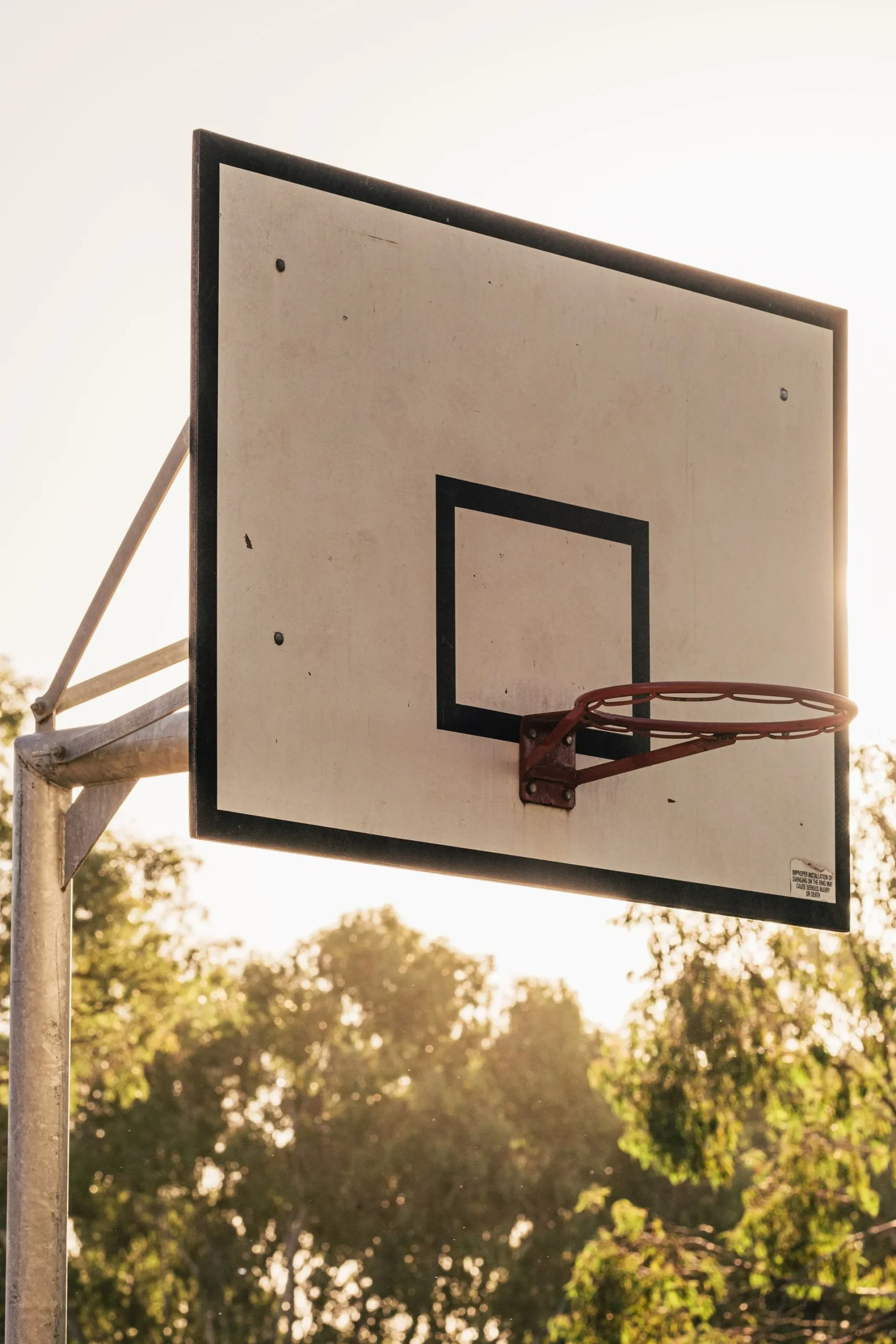
An in-ground basketball hoop can be worth the investment if you play regularly and want a permanent home setup.
Compared with portable basketball hoops, permanent systems can provide stronger supporting structures, larger backboards, and more overhang.
However, performance still depends on the model and installation quality.
In-ground systems also have disadvantages.
They require a suitable foundation, cost more to install, and are difficult to relocate.
For casual basketball or rented properties, a portable hoop may be more practical.
If you own your home, have suitable space, and expect to use the hoop for years, a well-chosen in-ground system can be a worthwhile purchase.
In-Ground Basketball Hoop Maintenance and Warranty
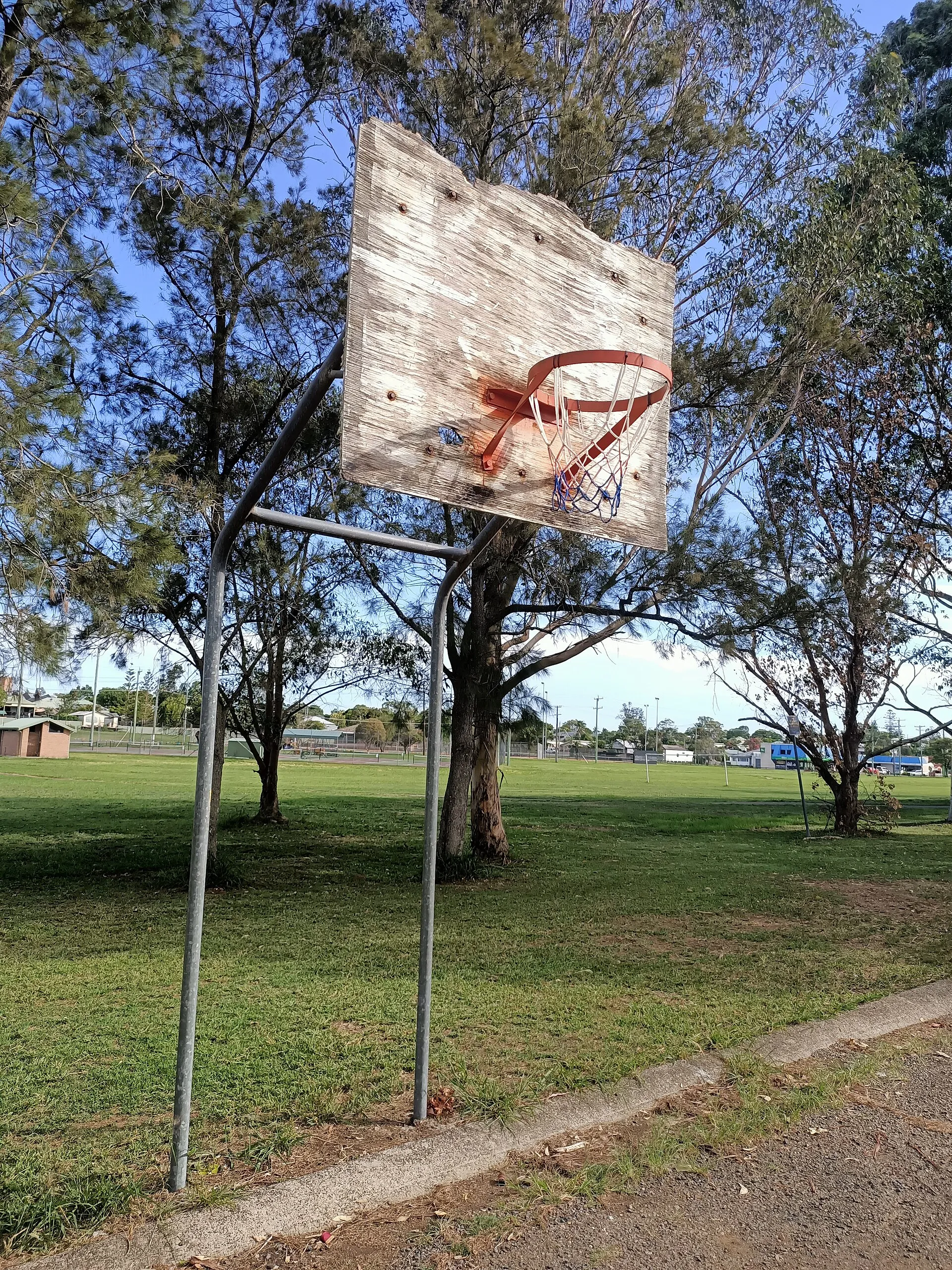
Even premium outdoor basketball hoops need regular inspections.
Check the supporting pole, accessible bolts, rim, padding, and backboard for damage.
Look for rust, loose connections, cracked components, or unusual movement.
Follow the manufacturer’s cleaning instructions and address damaged protective coatings before corrosion becomes more serious.
Warranty coverage also varies considerably.
Some models have five-year limited warranties, while premium systems advertise limited lifetime coverage.
However, lifetime coverage rarely means every component and repair cost is included.
Glass, rims, labor, shipping, environmental damage, and improper use may have separate exclusions.
Before buying, read the warranty for the exact model and check whether replacement parts remain available.
Frequently Asked Questions
What Are the Best In-Ground Basketball Hoops?
The Silverback SB60 is our best overall value pick because it combines a 60-inch tempered glass backboard, adjustable height, and included padding at a relatively accessible price.
The Lifetime 71525 is a cheaper option, while the Goalrilla FT72 and Mega Slam 72 offer larger backboards and heavier construction.
Which Basketball Hoop Is Best for a Driveway?
For many residential driveways, a 54-inch or 60-inch adjustable in-ground basketball hoop is a practical choice.
The Silverback SB54 and SB60 are worth comparing.
Measure the available playing space and check the hoop’s overhang before choosing a model. For more advice on positioning, clearance, and setup, read our driveway basketball hoop guide.
Is an In-Ground Basketball Hoop Worth It?
Yes, if you want a permanent basketball setup and expect to use it regularly.
However, installation costs and relocation difficulties can make a portable basketball hoop more suitable for occasional players.
What Is the Best Freestanding Basketball Hoop?
The term freestanding can refer to different basketball systems.
If you mean a hoop with a movable weighted base, look for a portable basketball hoop rather than an in-ground model.
Our portable basketball hoop buying guide compares eight options.
Can You Move an In-Ground Basketball Hoop?
Sometimes.
Anchor-mounted systems can often be disassembled, but relocating them generally requires a new compatible foundation and substantial labor.
Direct-burial hoops are usually harder to remove because part of the pole is embedded in concrete.
Can You Dunk on an In-Ground Basketball Hoop?
Some in-ground basketball hoops are designed to withstand dunking.
However, this doesn’t mean players can hang from the rim.
Always check the exact model’s safety instructions and warranty restrictions.
Is a 72-Inch Basketball Backboard Necessary?
No.
A 72-inch backboard matches NBA regulation width, but smaller 54-inch and 60-inch backboards can work well for home basketball.
The right size depends on your space, budget, and playing needs.
Final Verdict
The Silverback SB60 is our best overall in-ground basketball hoop for homeowners who want a permanent glass-backboard system without premium pricing.
Choose the Lifetime 71525 if keeping costs low is your priority.
The Goalsetter All-American 60 is worth considering for families who need a lower minimum rim height, while the Goalrilla FT72 suits serious players who want regulation-width practice.
For a premium home court, the Mega Slam 72 offers thick tempered glass, heavy-duty construction, extensive padding, and a wide adjustment range.
Whichever model you choose, compare the total installed cost, confirm the exact specifications, and follow the manufacturer’s installation requirements.
5 thoughts on “Best In-Ground Basketball Hoops | 9 Picks for Every Budget”
Comments are closed.