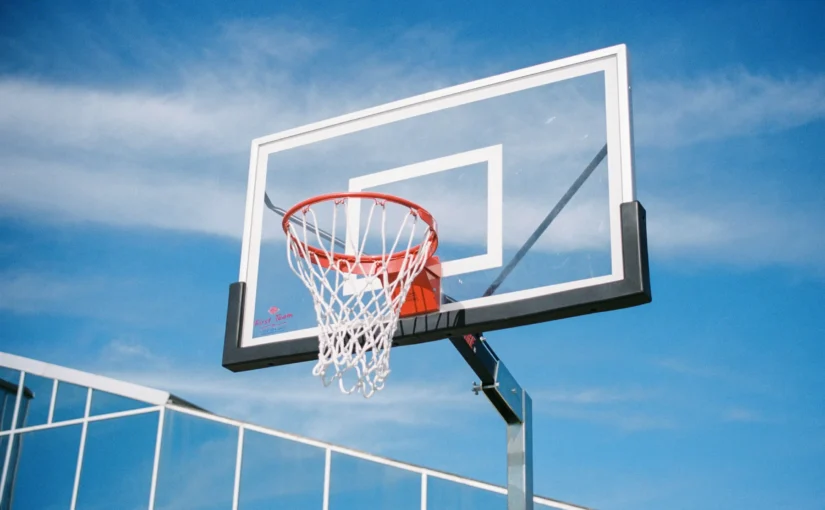
The main basketball backboard materials are tempered glass, acrylic, and polycarbonate. Tempered glass generally provides the most competition-like rebound, acrylic offers a balance of performance and durability, and polycarbonate is known for its high impact resistance.
However, the material alone doesn’t determine how well a basketball backboard performs. Its thickness, frame, and mounting system also affect how the ball bounces.
Here’s how the materials compare and which one makes the most sense for your basketball hoop.
What Are Basketball Backboards Made Of?
Most transparent basketball backboards use tempered glass, acrylic, or polycarbonate. Other options include steel, aluminum, fiberglass, and high-density polyethylene (HDPE).
The playing surface and frame aren’t necessarily made from the same material. For example, a polycarbonate basketball backboard may have a steel frame. You can learn how these components fit together in our guide to the parts of a basketball hoop.
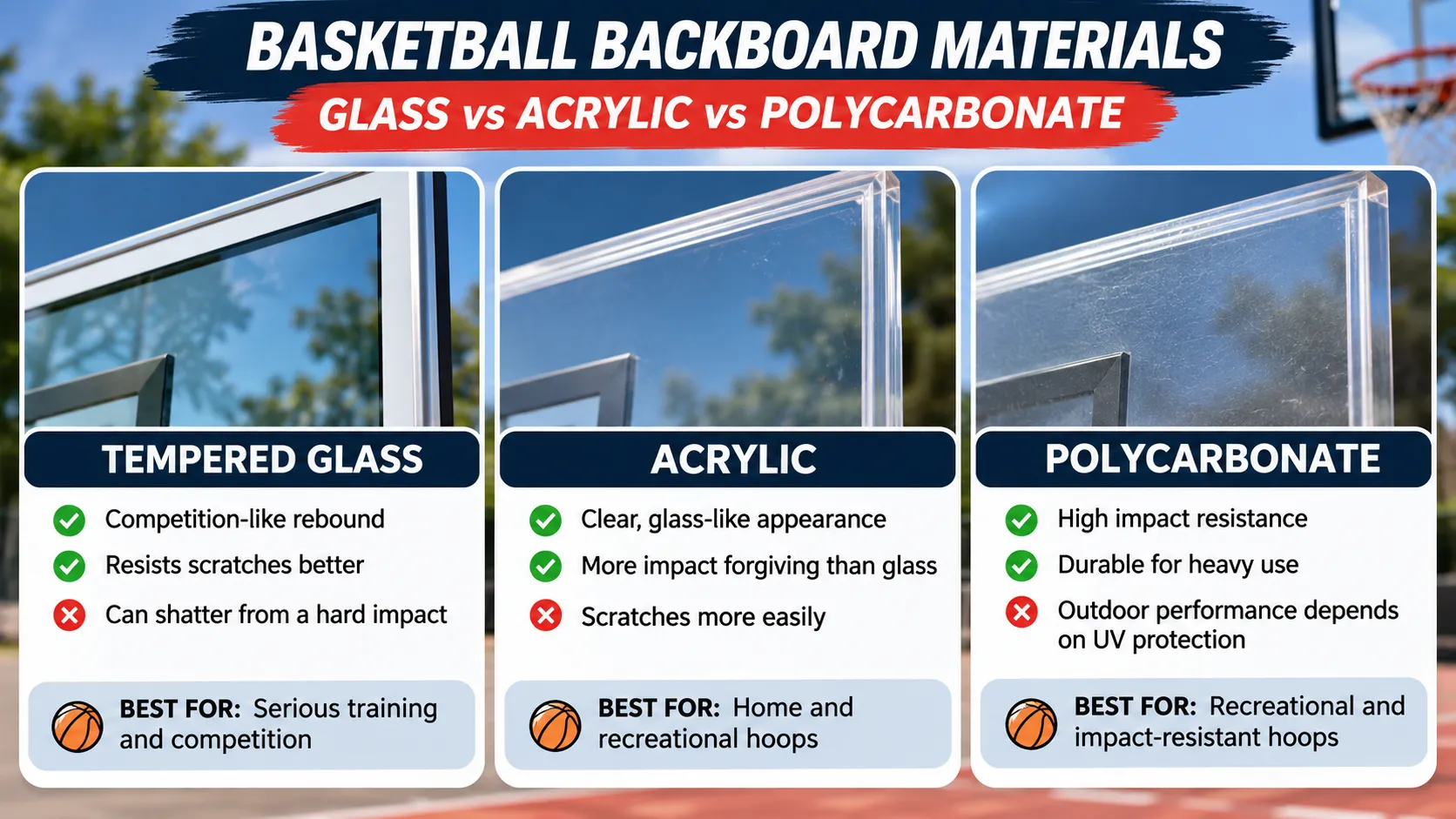
| Material | Main Advantage | Main Drawback | Typical Use |
|---|---|---|---|
| Tempered glass | Competition-like rebound | Can shatter | Serious training and competition |
| Acrylic | Balance of appearance and durability | Scratches more easily than glass | Home and recreational hoops |
| Polycarbonate | High impact resistance | Outdoor performance depends on UV protection | Recreational and impact-resistant hoops |
Tempered Glass Backboards
Tempered glass is a strong choice for players who want a basketball backboard with a firm, lively rebound. Its rigidity helps provide the ball response associated with competition equipment.
High-level basketball systems use safety glass, although FIBA’s equipment rules allow both tempered glass and laminated safety glass for Level 1 competition.
Glass also resists scratching better than standard acrylic. However, it can still shatter when struck by a hard object. Suitable framing, mounting, and handling are important.
Tempered glass isn’t limited to indoor courts. Manufacturers such as Goalrilla sell glass basketball hoops specifically designed for outdoor home use.
Acrylic Backboards
Acrylic is a clear plastic material that provides a glass-like appearance without using glass. It is common on recreational basketball hoops and can be a sensible choice for home courts, especially for families who want a transparent board without paying for a higher-end glass system.
Compared with tempered glass, acrylic is generally more forgiving of impacts from hard objects. However, it scratches more easily, and the rebound may feel less lively, depending on the board’s thickness and support structure.
Acrylic also requires suitable cleaning products. ACRYLITE recommends mild soap, lukewarm water, and a soft cloth. Ordinary window-cleaning sprays can damage some acrylic surfaces.
Acrylic can also perform well outdoors when the board is designed for outdoor use. However, its appearance and lifespan still depend on the material grade, surface condition, and overall construction.
For casual players who want a transparent basketball backboard without prioritizing professional-style rebound, a well-supported acrylic model is worth considering.
Polycarbonate Backboards
Polycarbonate is another clear plastic, but it isn’t the same material as acrylic. Its main advantage is exceptional impact resistance, making it useful where resistance to hard impacts matters.
Polycarbonate basketball backboards are available in lightweight residential designs and thicker, reinforced versions intended for demanding recreational environments.
One major consideration is exposure to UV light. Poorly protected polycarbonate can deteriorate outdoors, affecting its appearance and physical properties. However, UV-protected grades exist, as demonstrated by Plaskolite’s TUFFAK UV material.
This doesn’t mean every polycarbonate basketball backboard uses that particular grade. Always check the manufacturer’s outdoor rating and warranty rather than assuming the board will resist yellowing indefinitely.
Polycarbonate’s impact resistance also doesn’t guarantee a competition-like bounce. A thin, flexible board may respond differently from a thicker model with strong framing.
Acrylic vs Polycarbonate: Which Is Better?
Neither is automatically the best choice. Acrylic can provide a useful balance of appearance, weathering performance, and recreational rebound. Polycarbonate is particularly attractive when resistance to hard impacts is the priority.
Both clear plastic materials are sold in different thicknesses and constructions, so comparing two complete basketball hoops is more useful than comparing material names alone.
For example, a thick, strongly framed polycarbonate backboard may perform differently from a thin, flexible model made from the same material.
For competition-like bank shots, a rigid tempered glass system remains the stronger starting point. First Team also favors tempered glass for lively ball response, although its performance claims should not be treated as universal measurements.
Other Basketball Backboard Materials
Steel backboards are used in some parks, schools, and unsupervised recreational courts. Their reinforced construction can provide a robust playing surface, although protective coatings need maintenance where rust becomes a concern.
Aluminum is another outdoor option, offering corrosion resistance and, in some designs, perforations that reduce wind exposure.
Fiberglass boards are available for recreational facilities, while HDPE is used in some inexpensive family basketball systems. Wood is also possible, but outdoor wooden boards need suitable weather protection and upkeep.
These alternatives are useful for particular settings, but they don’t all produce the same ball response.
Which Basketball Backboard Material Is Best?
For serious basketball practice: Choose tempered glass on a rigid, stable system if you want a rebound closer to competition equipment.
For casual home basketball: Consider acrylic when you want a clear board with balanced recreational performance.
For impact resistance: Consider a well-supported polycarbonate model, particularly when repeated hard impacts are a concern. Check its outdoor suitability if necessary.
For public courts: Steel, aluminum, and purpose-built reinforced plastic boards may be practical where vandal resistance and maintenance matter.
Whatever material you choose, check the complete hoop’s stability, construction, and intended use. Our basketball backboard dimensions guide can help you understand the available sizes.
If you’re changing an existing board, confirm compatibility with the manufacturer before purchasing. Different materials can require different supports and mounting arrangements. See our basketball backboard replacement guide for more information.
Frequently Asked Questions
Can a Tempered Glass Backboard Shatter?
Yes. Tempered glass is stronger than ordinary glass, but it isn’t unbreakable. A hard-object impact can cause it to shatter, so suitable installation and safe use are essential.
Do Polycarbonate Backboards Turn Yellow?
Some polycarbonate backboards can yellow or deteriorate after prolonged outdoor exposure. However, UV protection and material grade affect weather resistance, so yellowing isn’t inevitable within a fixed number of years.
Can You Use a Glass Backboard Outdoors?
Yes. Tempered glass basketball backboards can be used outdoors when the complete hoop is designed for that environment. Check the manufacturer’s specifications, mounting requirements, and warranty before buying.
3 thoughts on “Basketball Backboard Materials | Glass vs Acrylic vs Polycarbonate”
Comments are closed.